Smart TRV vs Room Thermostat: Which Should Come First?
The smart TRV vs room thermostat decision is really a control-order question. A room thermostat gives the heating system a central demand signal: heat the home until this measured area reaches the target temperature, then stop. A smart thermostatic radiator valve, or smart TRV, changes what happens at one radiator. It can open, close, schedule and limit heat in a specific room, but it does not automatically make the whole heating system smarter unless the wider system can respond to that room demand.
This London LEC comparison is an editorial review based on official product pages, public heating-control guidance and practical installation fit. We have not carried out hands-on installation or energy-use testing. Our focus is the decision a London reader actually faces: whether to start with radiator-level zoning from systems such as tado, Hive or Drayton Wiser, or with a room thermostat such as Hive Thermostat, Google Nest Learning Thermostat or a Drayton Wiser room thermostat.
If you are still mapping the wider heating-control category, our guides to smart radiator valves in London flats and the best smart radiator valves are useful companion reads. For how we handle recommendations and affiliate links, see our editorial policy and about page.
Quick Verdict
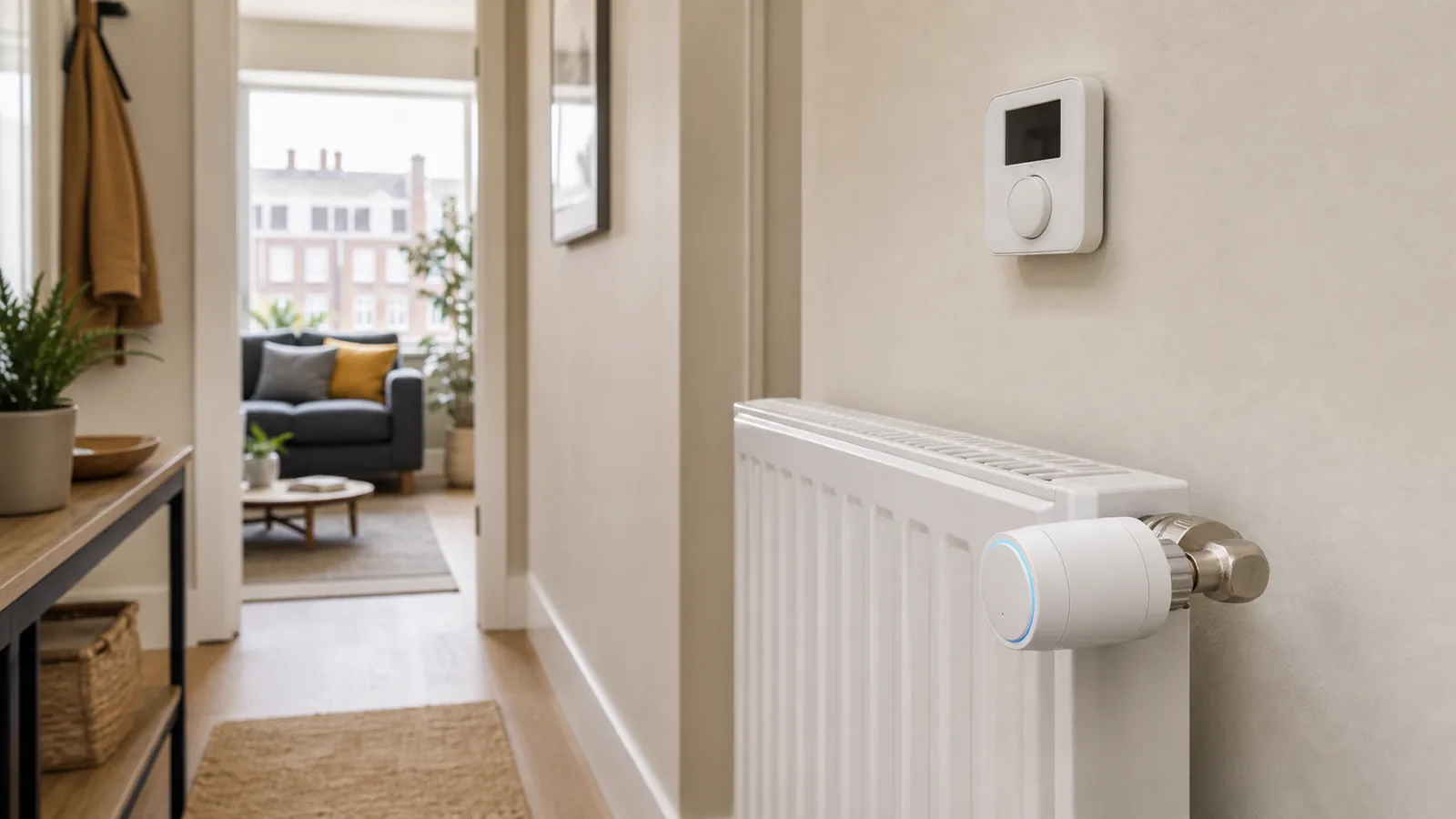
For most London flats and small houses, a room thermostat should come first if the heating problem is whole-home timing, basic app control or a poor central schedule. It is the cleaner first upgrade when the home broadly heats as one space and you want the boiler to respond to one clear control point.
Smart TRVs should come first only when the problem is genuinely room-specific. A bedroom may overheat before bedtime, a home office may stay cold in the morning, or a living room may need evening heat without warming the spare room. In those cases, radiator-level control can be more valuable than a smarter wall control.
Energy Saving Trust explains heating controls as a set of components including programmers, room thermostats and TRVs, and notes that central heating systems should include at least a programmer, at least one room thermostat and TRVs source. That matters because this is not an either/or category forever. The real question is which layer gives you the first useful improvement.
What Each Control Actually Controls
A room thermostat measures temperature in one location and tells the heating system whether heat is needed. A programmable or smart thermostat adds schedules, remote control and sometimes learning or occupancy features. Hive says its thermostat can manage heating and hot water through the Hive app, support additional thermostats for up to six heating zones in suitable multizone systems, and work with voice assistants source. Google positions the Nest Learning Thermostat around learned schedules, phone-based presence features and mobile temperature adjustment source.
A smart TRV works closer to the radiator. tado describes its Smart Radiator Thermostat as a way to control individual rooms and schedules from the app source. Hive and Drayton Wiser radiator valves sit in the same broad control category: they replace or attach to compatible thermostatic radiator valve bodies so each radiator can follow a more specific room plan.
The catch is that radiator control is not the same as boiler control. A valve can reduce heat entering a room. It may not, on its own, tell the boiler to fire when only that room needs heat. That distinction is the main reason London LEC usually treats the room thermostat as the safer first step for simple homes.
Boiler Interlock and Demand Control
The phrase to understand is boiler demand. In a clean setup, the heating system should stop asking the boiler for heat when heat is not required. Energy Saving Trust describes boiler interlock as connected controls that switch the boiler off when heating and hot water thermostats have reached their set temperatures source. Without that logic, the boiler can run when useful heat is not needed.
A room thermostat is normally closer to that central demand role. It is not automatically perfect, because placement matters. A thermostat in a warm hallway can satisfy early while a bedroom stays cool. A thermostat in a draughty living room can keep the boiler running while bedrooms overheat. But at least it is the control the system is usually designed to obey.
Smart TRVs complicate demand in a useful but system-dependent way. In a well-integrated setup, a smart valve in a cold room can request heat through the same ecosystem. In a weakly integrated setup, the valve may only open while the boiler still follows a hallway thermostat. That can leave readers disappointed: the app shows a room wants heat, but the central system has not been asked to supply it.
This is why product ecosystem matters. tado radiator thermostats make most sense inside a tado heating-control plan. Hive radiator valves make most sense in homes already using Hive Active Heating. Drayton Wiser is strongest when you are building a Wiser heating system rather than mixing unrelated controls.
Product Examples: Where Each Route Fits
| Route | Examples | Best fit | Watch before buying |
|---|---|---|---|
| Smart radiator valve system | tado Smart Radiator Thermostat, Hive Radiator Valve, Drayton Wiser Radiator Thermostat | Room-by-room schedules, uneven temperatures, home offices, bedrooms | Valve-body compatibility, adapters, hub range, batteries and whether the system can call for heat |
| Room thermostat | Hive Thermostat, Google Nest Learning Thermostat, Drayton Wiser room thermostat | Whole-home schedule, central demand, simpler app control, first smart-heating upgrade | Boiler compatibility, wiring, receiver location, thermostat placement and multizone limits |
| Combined system | Smart thermostat plus matching radiator valves | Larger flats, uneven terraces, mixed occupancy patterns | Cost, ecosystem lock-in, setup complexity and maintenance across every radiator |
tado is the obvious example when the reader wants radiator-led room control. It is more persuasive when multiple rooms need independent schedules and the buyer is prepared to check bridge, hub or wider system requirements.
Hive is stronger for households already committed to Hive. If the reader is comparing Hive Thermostat and Hive radiator valves, the thermostat is usually the base layer and the valves are the room-level expansion. Our Hive heating controls review goes deeper on that ecosystem decision.
Drayton Wiser sits between those positions. It is a heating-first ecosystem rather than a general smart-home fashion choice, which can be useful for readers who care more about practical zoning than broad device branding. Still, the same rule applies: check the room thermostat, hub and radiator thermostat compatibility together, not as separate purchases.
London Flat Scenarios
In a one-bedroom flat that heats evenly, choose the room thermostat first. The likely gain is a better schedule, remote adjustment and clearer boiler behaviour. Adding several smart TRVs may create more batteries, more app settings and more points of confusion without solving a real comfort problem.
In a two-bedroom flat where the living room is warm but the second bedroom is a weekday office, smart TRVs become more attractive. A radiator schedule for the office can reduce the need to heat bedrooms or living spaces at the wrong time. If the system can also request heat properly, the value improves.
In a converted Victorian flat, do not start with the app. Start with the physical installation. Radiators may have mixed valve bodies, old pipe positions, covers, curtains, bay windows or furniture blocking the valve head. Our guide to smart radiator valves in London flats covers those fit checks in more detail.
In a rental, avoid any change that touches boiler wiring or replaces metal valve bodies without permission. Swapping a removable TRV head may be reversible, but landlord approval still matters. Keep the original heads, document what changed and do not assume communal heating behaves like a private combi boiler.
Installation Friction: Thermostat vs TRV
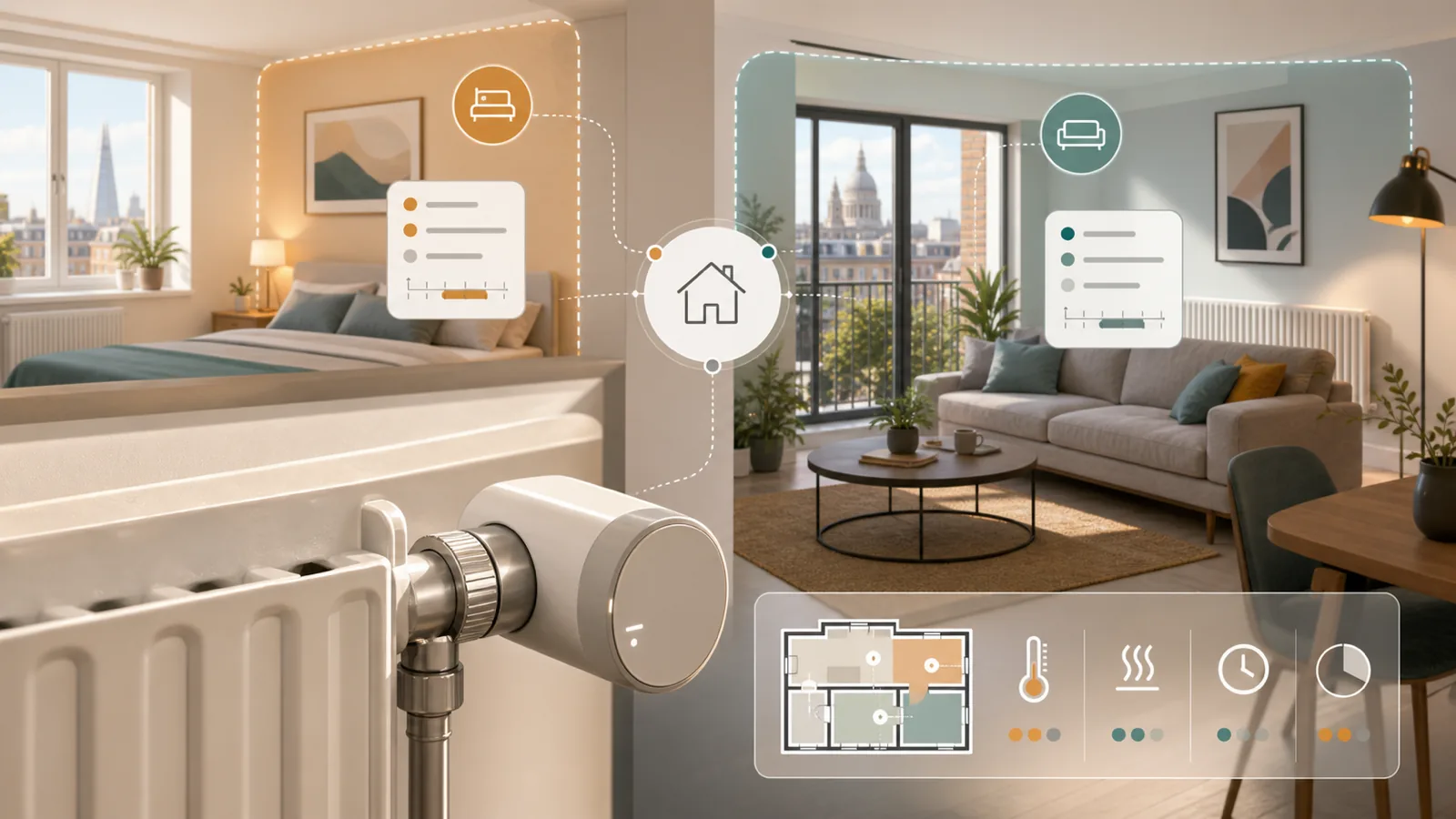
A room thermostat can be simple or awkward. If there is already a compatible thermostat position and the boiler receiver is straightforward, it may be a clean professional install. If wiring is unclear, the boiler is old, or the existing programmer is part of a more complex system, it becomes a compatibility job.
Smart TRVs can look easier because many replace only the plastic radiator head. But a whole-home smart TRV plan means checking every radiator. One valve may fit neatly, another may need an adapter, and a third may be too close to a wall or radiator cover for comfortable battery access. Signal range can also be less predictable in London flats with thick walls, long corridors or routers hidden near the entry.
If installation work overlaps with shelves, trunking, nearby sockets or DIY drilling, treat it as a broader home-safety project. Read our guide to wire detectors for DIY drilling in London flats before drilling near heating pipes or cables, and our RCD plug adaptor guide if temporary powered tools are involved. If the work reveals older electrical infrastructure, our consumer unit upgrade guide explains when a bigger electrical review may be sensible.
When Smart TRVs Should Come First
Choose smart TRVs first when the rooms, not the whole home, are the problem. Common examples include a nursery that should not follow the living-room schedule, a spare room that is rarely used, a bedroom that overheats, or a work-from-home space that needs morning heat before the rest of the flat.
This route is strongest when there is already a decent central thermostat and the radiator valves are compatible. It is also stronger when the chosen smart TRV system can integrate with the central heating control rather than merely opening and closing radiators during an existing heating window.
Do not choose smart TRVs first just because they feel more advanced. More zones mean more settings to maintain. Batteries need replacing or charging. Guests may not understand manual overrides. If the main problem is that the whole flat comes on too early or stays on too late, radiator valves are probably solving the wrong layer first.
When a Room Thermostat Should Come First
Choose the room thermostat first when the property needs a better central brain. That includes homes with a crude timer, an awkward old thermostat, no useful app control, or a schedule that does not match working patterns. A good thermostat upgrade can make the daily heating routine easier before you add any radiator hardware.
A room thermostat also makes sense when the home is small and open-plan. Many London flats behave as one or two connected spaces. If the kitchen, living room and hallway warm together, room-by-room control may not add enough value to justify the extra equipment.
Placement is the main caution. A thermostat should not be in a draught, next to a heat source, hidden behind furniture or placed where one unusual room controls the whole property. If the only sensible thermostat location is not representative, smart TRVs may later help balance the rooms.
Should You Mix Smart TRVs and a Room Thermostat?
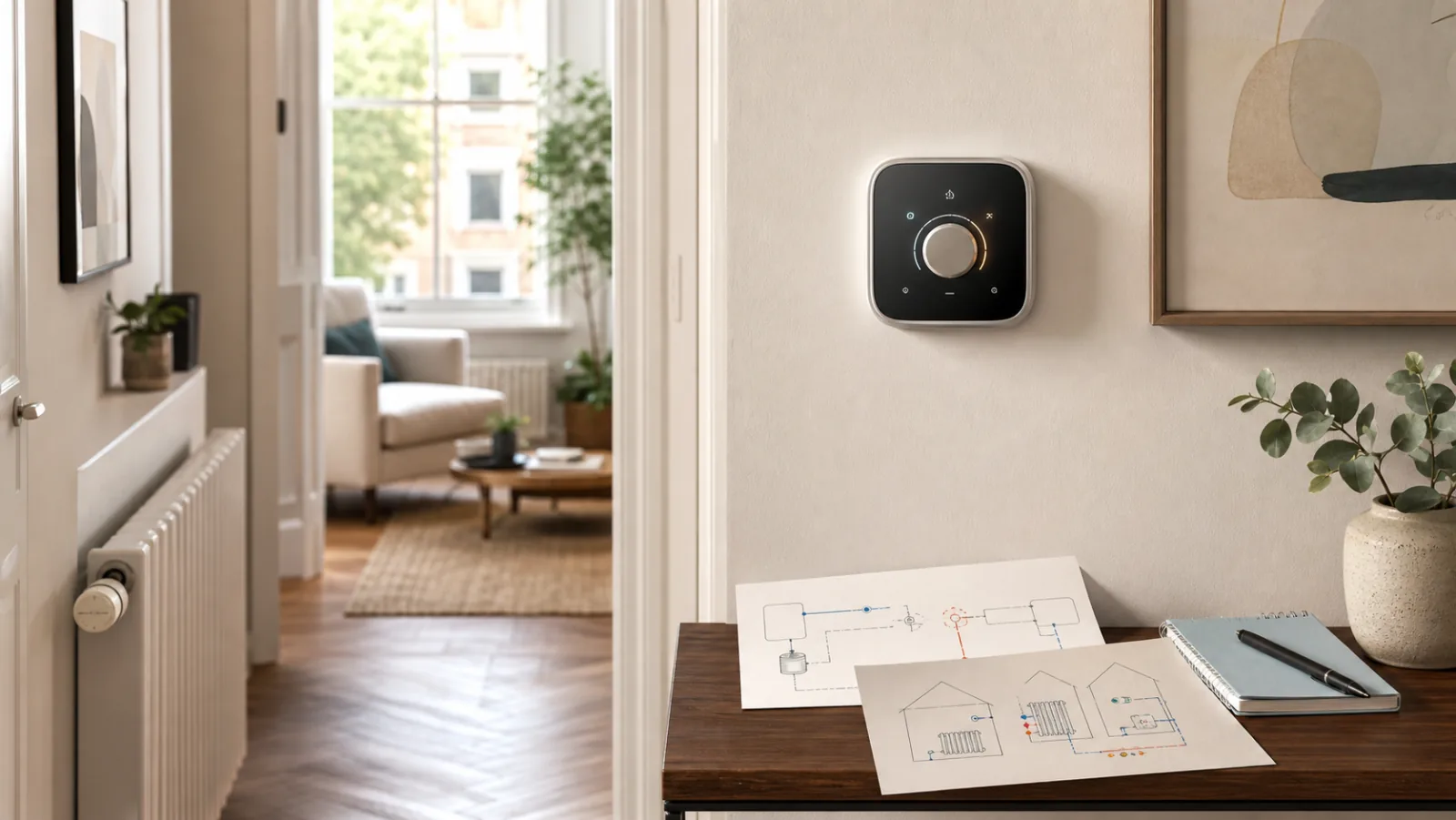
Yes, but keep the ecosystem coherent. The best combined setups normally use a thermostat, receiver or hub that understands the radiator valves. That is how room-level schedules become useful heating demand rather than isolated valve behaviour.
Avoid mixing brands casually. A Nest thermostat and unrelated radiator valves may both be good products, but they may not coordinate boiler demand in the way a reader expects. The result can be two apps, two schedules and unclear responsibility for whether the boiler should be on.
For most readers, the staged route is safer. Start with the room thermostat if whole-home control is weak. Add smart TRVs later in the rooms where the thermostat cannot represent comfort properly. Start with smart TRVs only if the central control is already acceptable and the room-level problem is obvious.
Buying Checklist
Before buying, answer these questions.
- Does the whole home need a better central schedule, or do only certain rooms need different temperatures?
- Can the chosen thermostat control the boiler or receiver you actually have?
- Do the existing radiators have compatible thermostatic valve bodies?
- Will each smart TRV have enough clearance for display, manual control and battery access?
- Can the system request heat from room demand, or does it only restrict radiator flow?
- Are you comfortable maintaining extra batteries, hubs and app settings?
- If you rent or live in a leasehold flat, do you have permission for the work?
If the answers mostly point to central demand and scheduling, buy the room thermostat first. If they point to room-level comfort and confirmed valve fit, smart TRVs deserve the first slot.
FAQ
Is a smart TRV the same as a smart thermostat?
No. A smart TRV controls flow through one radiator. A smart thermostat usually controls the central heating demand for the home or zone. They can work together, but they are not interchangeable controls.
Will smart TRVs save money?
They can help reduce unnecessary room heating when used well, but savings depend on the property, schedules, insulation, boiler behaviour and user habits. Treat them as control tools, not guaranteed bill-cutting devices.
Is Nest better than smart radiator valves?
Nest and smart radiator valves solve different problems. Nest is a room thermostat route for central control and learned scheduling. Smart radiator valves are a room-by-room route for uneven temperatures and different schedules.
Are smart TRVs worth it for London renters?
Sometimes, but only when the change is reversible and permitted. Renters should avoid boiler wiring, valve-body replacement or changes to landlord-owned controls unless they have written approval.
What should come first in a larger London home?
If the house has uneven rooms and several occupancy patterns, plan the thermostat and radiator valves together. A thermostat-only upgrade may be too blunt, but radiator valves without clean boiler demand can also disappoint.