A drill, a borrowed jigsaw, and one spare socket in a London flat can look harmless until the cable, wall, or extension lead becomes part of the job. The first safety question is not which accessory looks neat. It is whether the circuit has reliable RCD protection, and what you should do if you cannot confirm that before a short DIY task.
Disclosure: LondonLec may earn a commission if retailer links are added to this guide. Our recommendations are based on source checks, not paid placement. Read more about how we work on our About page and Editorial Policy.
The practical rule is simple: check the fixed installation first, then use a plug-in RCD accessory only as a temporary layer for appropriate tools and conditions. It does not repair a damaged socket, replace an electrician, or make wet work safe.
Why RCD Plug Adaptors for DIY Tools Matter in London Flats
Electrical Safety First advises using a residual current device with outdoor electrical equipment, and says that if there is no RCD built into the fusebox, a plug-in RCD should be used. Its garden safety guidance is blunt about the risk: cutting through an electrical lead without RCD protection can turn a routine job into a fatal shock risk.
That advice is not limited to gardens. London flats often combine older wiring, tight rooms, shared freeholder responsibilities, rented appliances, and borrowed tools. If you are drilling near a skirting board, cutting timber on a balcony, or using a corded tool through an extension lead, you need to know whether protection is already in the consumer unit. If you do not know, a plug-in RCD adaptor can be a useful short-term accessory, provided the socket, tool, cable, and environment are otherwise sound.
This is also where a DIY accessory guide should stay honest. An RCD reacts to earth leakage. A fuse protects against overload and fault current in a different way. Electrical Safety First explains that the fuse in a UK plug is there to cut power when an appliance or extension lead draws too much current. That is not the same as RCD protection. A surge protector is different again.
The Decision Tree Before You Buy
Start at the consumer unit. If the relevant circuit is already protected by an RCD or RCBO, a plug-in RCD may be unnecessary for indoor work, although some people still use one for an extra visible test/reset point on temporary tasks. If the consumer unit is old, labels are unclear, or trips have been happening, stop treating this as an accessory purchase and get the installation checked.
Next, inspect the plug, flex, and socket. Electrical Safety First recommends checking plugs and cables for cuts, nicks, crushing, cracks, overheating, exposed wires, and loose cable clamps. A plug-in RCD should never be used to make damaged equipment acceptable. If a cable is cut, a plug is cracked, or a socket is hot or buzzing, unplug and deal with the fault.
Then match the format to the task. For most light DIY in a flat, a plug-in adaptor is the lowest-friction option: it goes into the wall socket, then the tool plugs into it. A rewireable RCD plug or inline RCD is more specialist and only makes sense when the tool or extension lead is designed for that format and the wiring work is competent.
Three RCD Formats Worth Understanding
Plug-in RCD adaptor: simplest for temporary DIY
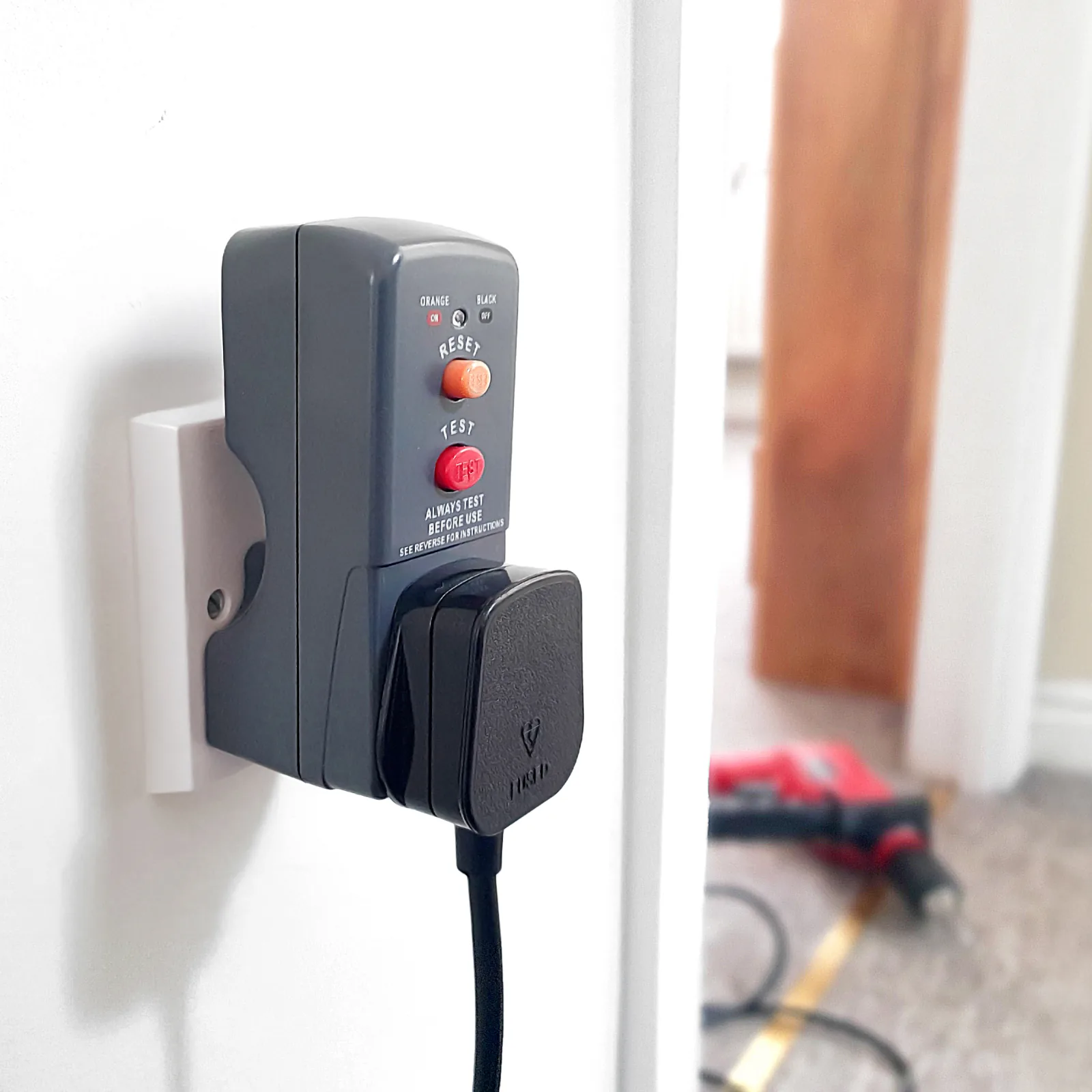
Masterplug lists the ARCDKG as a grey 13A RCD adaptor in its RCD Protection range. The official ARCDKG specification sheet lists one socket, 240VAC 50Hz operation, 13A maximum current, 3120W maximum load, a 30mA rated trip current, non-latching behaviour, and a typical 40ms trip speed at 150mA.
That makes the adaptor format the cleanest fit for occasional DIY tasks where the tool already has a standard UK plug and the socket position is accessible. It is also easier for a renter because it does not require changing a plug or altering a lead. The tradeoff is bulk at the socket. In a cramped flat, check that the adaptor will not foul a skirting-board socket, furniture, or a switched faceplate.
Price note: Masterplug did not list a manufacturer price in the source checked on 2026-07-03, so compare current retailer pricing before buying.
RCD plug: useful when the plug itself is the protection point
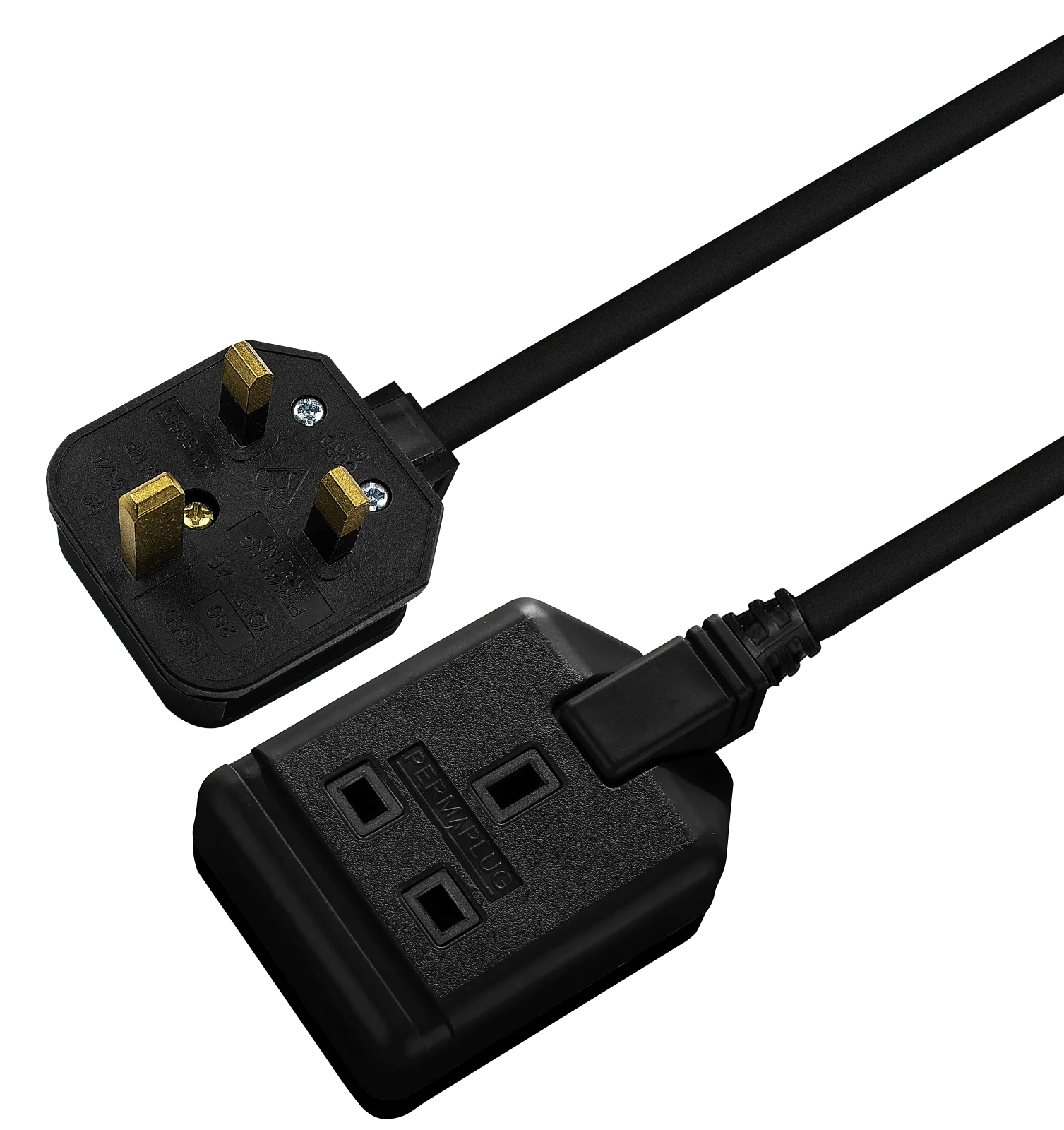
Masterplug lists the PRCDKB as a black 13A RCD plug. Its specification sheet describes it as an RCD safety plug for lawn mowers, hedge trimmers, and portable power tools, with 240VAC 50Hz operation, 13A maximum current, 3120W maximum load, 30mA rated trip current, non-latching behaviour, and a typical 40ms trip speed at 150mA.
This format can make sense for a tool or lead that is meant to be fitted with an RCD plug. For many flat owners and renters, it is not the first choice because it involves plug wiring and correct fuse selection. Electrical Safety First says a UK plug should be checked for correct cable clamping, correct fuse, no overheating signs, and secure internal wiring. If that work is outside your competence, choose a plug-in adaptor or ask a qualified person.
Price note: no official manufacturer price was shown in the source checked on 2026-07-03.
Inline RCD: consider only for the right cable setup
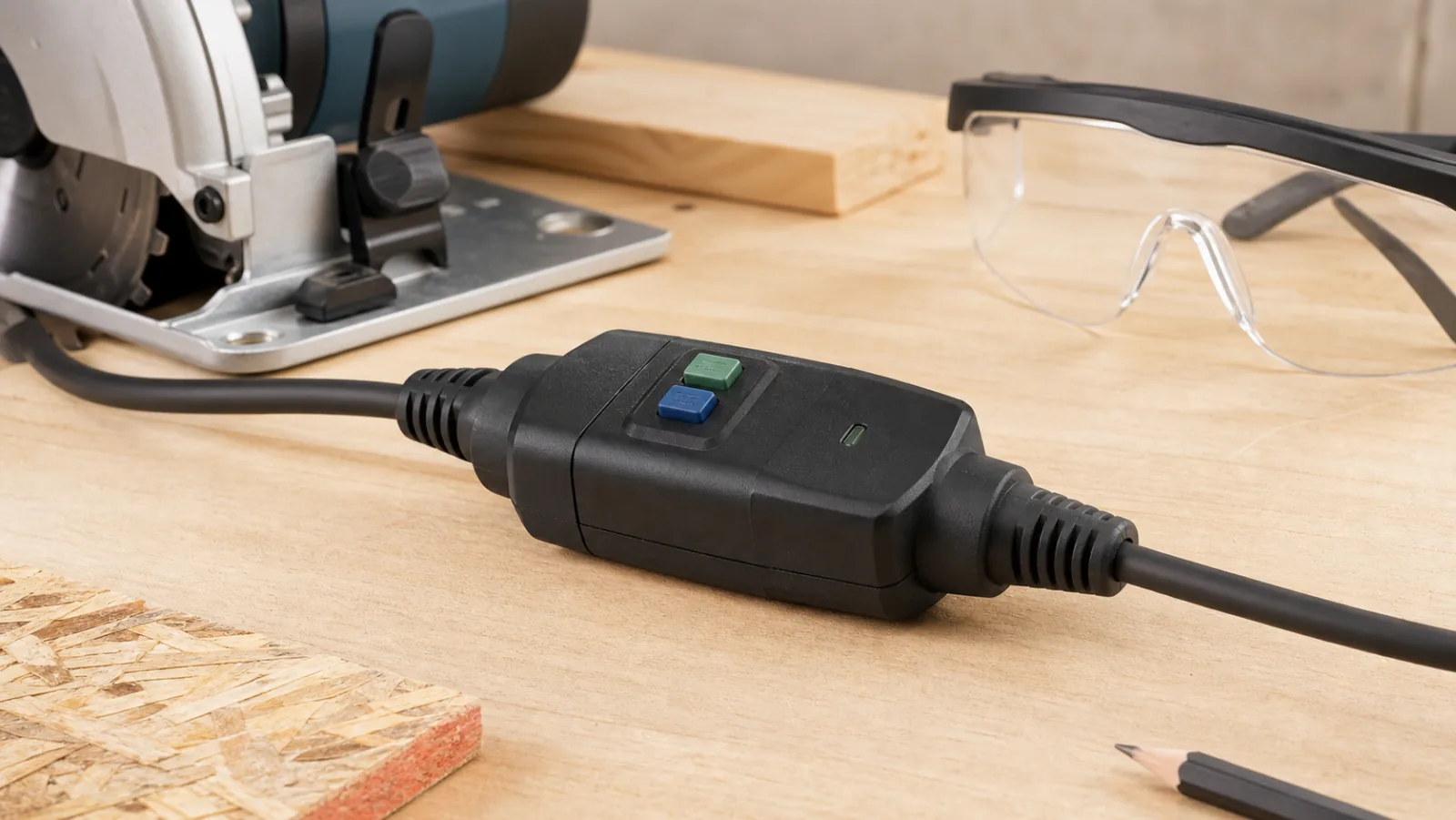
Masterplug lists ILRCDNG as a grey 13A inline RCD in the same RCD Protection range. The inline format is more about the cable assembly than the wall socket. It may suit a specific extension lead or tool setup where protection is designed into the lead rather than added as a wall adaptor.
For most London flat DIY, this is the format to approach with the most caution. If you are not sure why you need inline protection, you probably need the plug-in adaptor format instead. If you are working outdoors, Electrical Safety First also says extension leads, cable reels, and connectors should be suitable for outdoor use, weather-resistant, rated for the equipment, fully unwound where relevant, and kept dry.
How to Check Ratings Without Overbuying
The rating checks are not complicated, but they matter.
First, check current and load. The Masterplug ARCDKG and PRCDKB sheets list 13A and 3120W maximum load. That fits the common UK socket context, but it does not mean every extension lead, reel, or tool setup is safe at that load. Cable reels can overheat if left coiled, and Electrical Safety First specifically advises fully uncoiling cable reels and using equipment rated for the appliance.
Second, check trip current and reset type. A 30mA RCD is a common personal protection level for these plug-in accessories. The Masterplug sheets list non-latching behaviour, meaning the device trips when the supply is interrupted and must be reset. That can be mildly inconvenient, but for DIY use it is also a visible reminder to test and reset before the job.
Third, understand what the RCD does not do. It does not make damp conditions safe. Electrical Safety First says electricity and water do not mix, and outdoor equipment should not be used until conditions are dry. It also does not replace plug fuse selection. The fuse still needs to match the appliance, and a damaged plug or cable needs repair or replacement, not another accessory.
Which Format Fits Your Situation?
Use a plug-in RCD adaptor when you need temporary protection for a corded drill, sander, jigsaw, garden tool, or borrowed appliance and you can plug the tool directly into a normal socket. This is the practical default for light DIY in a flat.
Consider an RCD plug when the tool or extension lead is specifically intended to be fitted with that plug, and the person doing the wiring understands UK plug wiring, cable grip, earth connection, and fuse selection. If that sounds like a stretch, do not learn on a safety device.
Consider an inline RCD only when the lead or tool setup calls for inline protection and you can verify the product documentation. It is not a decorative upgrade for a random extension lead.
Do not buy any RCD accessory to work around a suspect consumer unit, hot socket, repeated tripping, damaged cable, or landlord repair issue. In rented flats, the wider safety question may be the fixed installation and inspection history, not the accessory in your basket.
Common Mistakes to Avoid
The first mistake is confusing RCD protection with surge protection. Surge protection is about voltage spikes. RCD protection is about leakage current and electric shock risk. They solve different problems.
The second mistake is plugging one extension lead into another. Electrical Safety First warns against using one socket extension lead into another because of overload risk. If the tool cannot reach the work area safely, change the setup rather than chaining leads.
The third mistake is ignoring the TEST button. The Masterplug sheets say users should follow the test procedure before each application. A device you never test is not giving you the assurance you think it is giving.
The fourth mistake is treating an accessory as a permission slip for wet or damaged work. The manufacturer safety warnings say not to immerse the device, not to use it in wet or humid conditions, and to stop use if the case is damaged. That should be read literally.
Internal Reading for the Same Job
If you are drilling into walls, read our guide to wire detectors for DIY drilling in London flats before choosing the drill bit. If your flat has an older board or unclear circuit protection, compare the priorities in consumer unit upgrades for London homes. For wider backup planning, see electrical emergency cover and electrical cover offers worth checking.
FAQ
Do I need an RCD plug adaptor if my fusebox already has RCD protection?
Maybe not for normal indoor DIY, but confirm the circuit first. If the consumer unit has RCD or RCBO protection on the socket circuit you are using, a plug-in adaptor may duplicate protection. If the board is old, unlabelled, or you are unsure, treat that uncertainty as an electrical safety question, not just a shopping question.
Is an RCD adaptor the same as a surge protector?
No. A surge protector is designed around voltage spikes that may damage equipment. An RCD is designed to cut power when it detects residual current leakage that can indicate electric shock risk. Some power accessories combine features, but you should check the product specification rather than assuming one label covers both jobs.
Can I use an RCD adaptor with a drill indoors?
Yes, if the adaptor is rated for the load, the drill and cable are undamaged, the socket is sound, and the environment is dry. A plug-in RCD is especially useful when you cannot confirm RCD protection at the consumer unit. It does not protect you from drilling into hidden cables, so use a detector and sensible drilling checks too.
What should I do if the RCD keeps tripping?
Stop and investigate. Repeated tripping can point to a faulty tool, damaged cable, damp conditions, an unsuitable setup, or an installation issue. Masterplug’s safety instructions tell users to seek expert advice or contact the manufacturer helpline if the RCD repeatedly trips. Do not keep resetting it just to finish the job.
Should renters buy an RCD adaptor or ask the landlord?
For a one-off light DIY task, a plug-in RCD adaptor can be a sensible accessory. But if sockets are damaged, the consumer unit is unclear, breakers trip often, or you suspect fixed wiring problems, involve the landlord or a registered electrician. A portable accessory should not be used to hide a repair issue in the flat.
Reference Sources
- Masterplug RCD Protection range
- Masterplug ARCDKG specification sheet
- Masterplug PRCDKB specification sheet
- Electrical Safety First garden safety guidance
- Electrical Safety First plugs and fuses guidance
Our editorial process is explained in the Editorial Policy. We do not claim hands-on testing unless we have actually performed it.
Title Candidates
- RCD Plug Adaptors for DIY Tools in London Flats: How to Choose Before You Cut or Drill
- Before You Drill: 3 RCD Plug Adaptor Checks for London Flats
- RCD Adaptor, RCD Plug, or Inline RCD: Which DIY Safety Fit Makes Sense?
- Using Power Tools in a London Flat? Check RCD Protection First
- The RCD Plug Adaptor Guide for Renters Doing Light DIY