A consumer unit upgrade is not just a nicer fuse box. It is the point where your electrician tests the existing installation, chooses how faults will be isolated, labels the circuits you will rely on later, and gives you paperwork that can matter for selling, renting, insuring, or renovating the home. That is why the best consumer unit upgrade options London homes should compare are not simply the cheapest metal boxes on a wholesaler shelf.
This London LEC shortlist is written for flats, maisonettes, and terraces where space is tight, meter cupboards may be awkward, and the wiring history can be mixed. It is not based on hands-on lab testing. It is based on manufacturer-published product information, UK safety guidance, and the practical questions a homeowner should ask before accepting a quote. You can read more about our scope on about London LEC and how we handle sourced buying advice in our editorial policy.
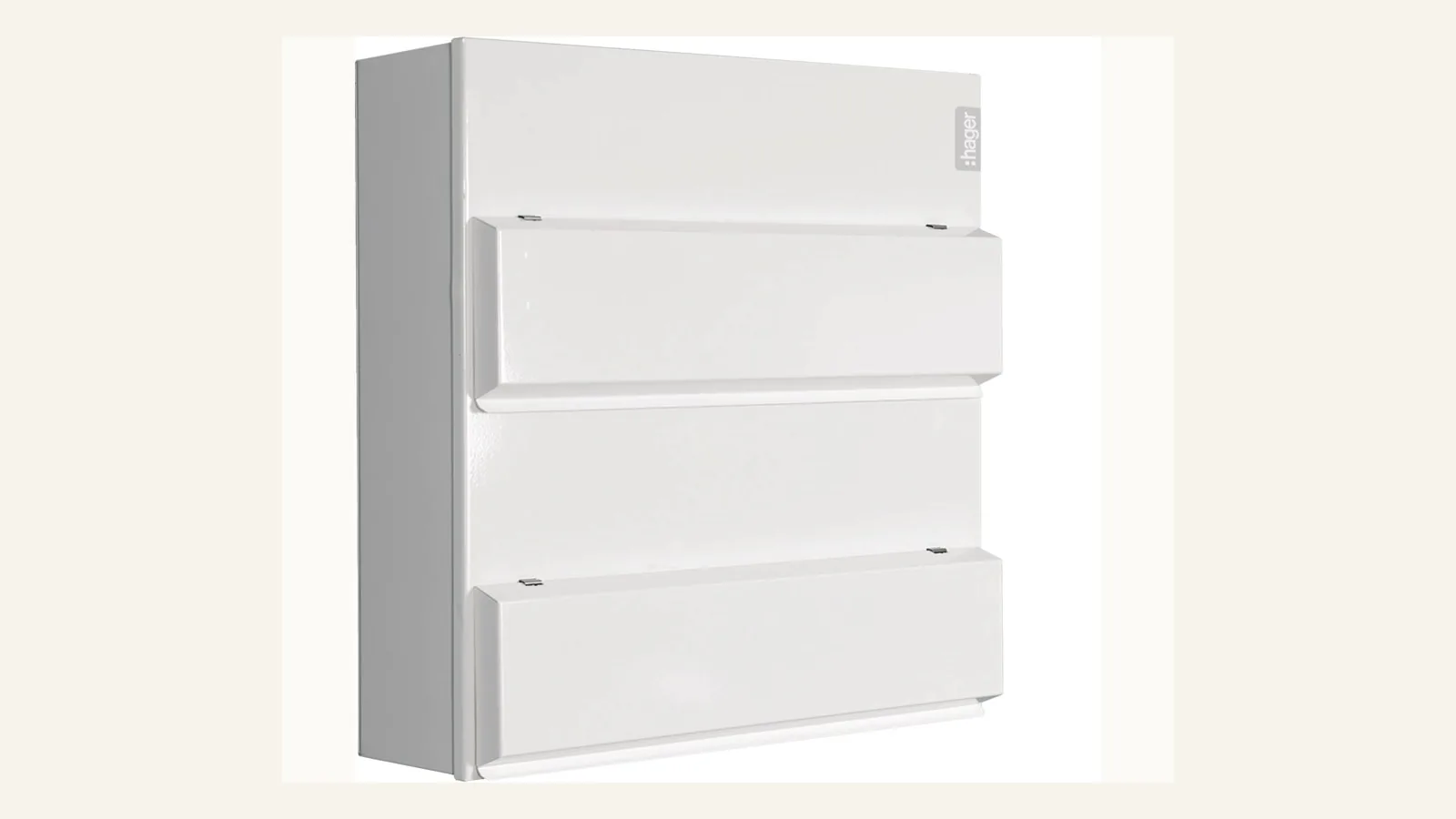
Shortlist: the best board ecosystems to discuss with your electrician
| Option | Best for | Why it stands out | Watch before choosing |
|---|---|---|---|
| Hager Design10 / Design30 ecosystem | Higher-spec upgrades where layout, enclosure quality, and accessories matter | Broad UK trade familiarity, clean metal enclosures, useful accessories, and flexible board planning | Confirm exact SKU, RCBO/SPD configuration, and whether the quote leaves enough spare modules |
| Wylex NM high-integrity boards | Familiar split-load or hybrid upgrades | Strong UK heritage and practical high-integrity layouts that can mix RCD banks with independent RCBO ways | Dual RCD designs can still drop several circuits at once if not specified carefully |
| FuseBox populated RCBO boards | Value-focused RCBO-first upgrades | Pre-populated RCBO boards can make per-circuit protection easier to price and compare | Check the breaker schedule matches the actual circuits, not a generic bundle |
| Schneider Electric Easy9+ | Installer-specified builds where the electrician wants a blank board platform | Flexible enclosure approach with a mainstream global brand behind the devices | Requires careful specification of incomer, RCD/RCBO/SPD devices, and final layout |
1. Hager Design10 / Design30 ecosystem: best overall for a planned upgrade
Hager is the board ecosystem to put first when the quote is not just replacing a box like-for-like, but planning the next decade of electrical work. The official Hager residential distribution catalogue lists Design10 consumer-unit details such as incomer type, steel enclosure, surface mounting, and published protection options. That specification is useful because it shows the kind of detail a good quote should expose: module count, enclosure material, current rating, IP rating, included devices, and whether overvoltage protection is included.
For London homes, Hager Design10 makes most sense where the electrician wants generous wiring room and a neat labelled layout. That can be valuable in converted terraces, larger flats, and homes expecting more circuits later: induction cooking, upgraded smoke and heat alarms, smart heating controls, a utility area, or a future small works package. Design30 is also worth discussing where visual finish, compact enclosure choices, or Hager accessory compatibility matter, but the exact part number is critical. A small enclosure, empty board, or consumer unit with a main switch is not the same as a fully specified RCBO and SPD upgrade.
The Hager route is not automatically the cheapest. Its value is in design headroom and installer familiarity. Ask whether the quote is RCBO-first, split-load, or high-integrity; whether a Type 2 SPD is included; how many spare usable ways remain after the actual circuit schedule; and whether alarms, fridge/freezer, boiler controls, or home-office circuits get sensible separation.
2. Wylex NM: best familiar high-integrity route
Wylex is a familiar name in UK domestic circuit protection, and the NM range is often quoted where the homeowner wants a recognisable, conventional board rather than a fully bespoke specification. A typical Wylex NM high-integrity product listing describes an all-metal pre-populated board with a 100A switch isolator, twin 80A 30mA RCDs, a Type 2 mini SPD, MCBs, and space for RCBO-protected critical circuits. That is the key Wylex angle: it can bridge the old split-load world and a more selective modern layout.
In a London flat, that hybrid approach can be sensible when budget is tight but the homeowner still wants better separation for important circuits. A high-integrity board can keep some circuits on RCD banks while using independent RCBO ways for circuits where nuisance tripping would be especially disruptive. For example, smoke alarms, security equipment, fridge/freezer, boiler controls, and a work-from-home socket circuit should not be treated casually. If fire detection is part of the broader plan, our guide to smoke and heat alarms for London flats is a useful companion read.
The tradeoff is that a dual RCD section can still drop several circuits together. That may be acceptable in a small terrace with simple wiring, but less attractive in a flat where the consumer unit is buried in a hallway cupboard and the resident works from home. If your quote says "Wylex dual RCD board" but does not explain which circuits share each RCD, ask for a circuit schedule before approving.
3. FuseBox populated RCBO boards: best value-focused RCBO-first option
FuseBox is strong when the quote is trying to make individual circuit protection affordable. A FuseBox RCBO consumer unit product listing describes a metal unit with Type A RCBOs, a T2 SPD, a 100A main switch, labels, knockouts, and BS EN 61439-3 approval. The important point is not the exact bundle on a retailer page; it is the RCBO-first pattern. Each final circuit gets its own combined residual-current and overcurrent protection device, so a fault should normally be easier to narrow down than with a bank protected by one RCD.
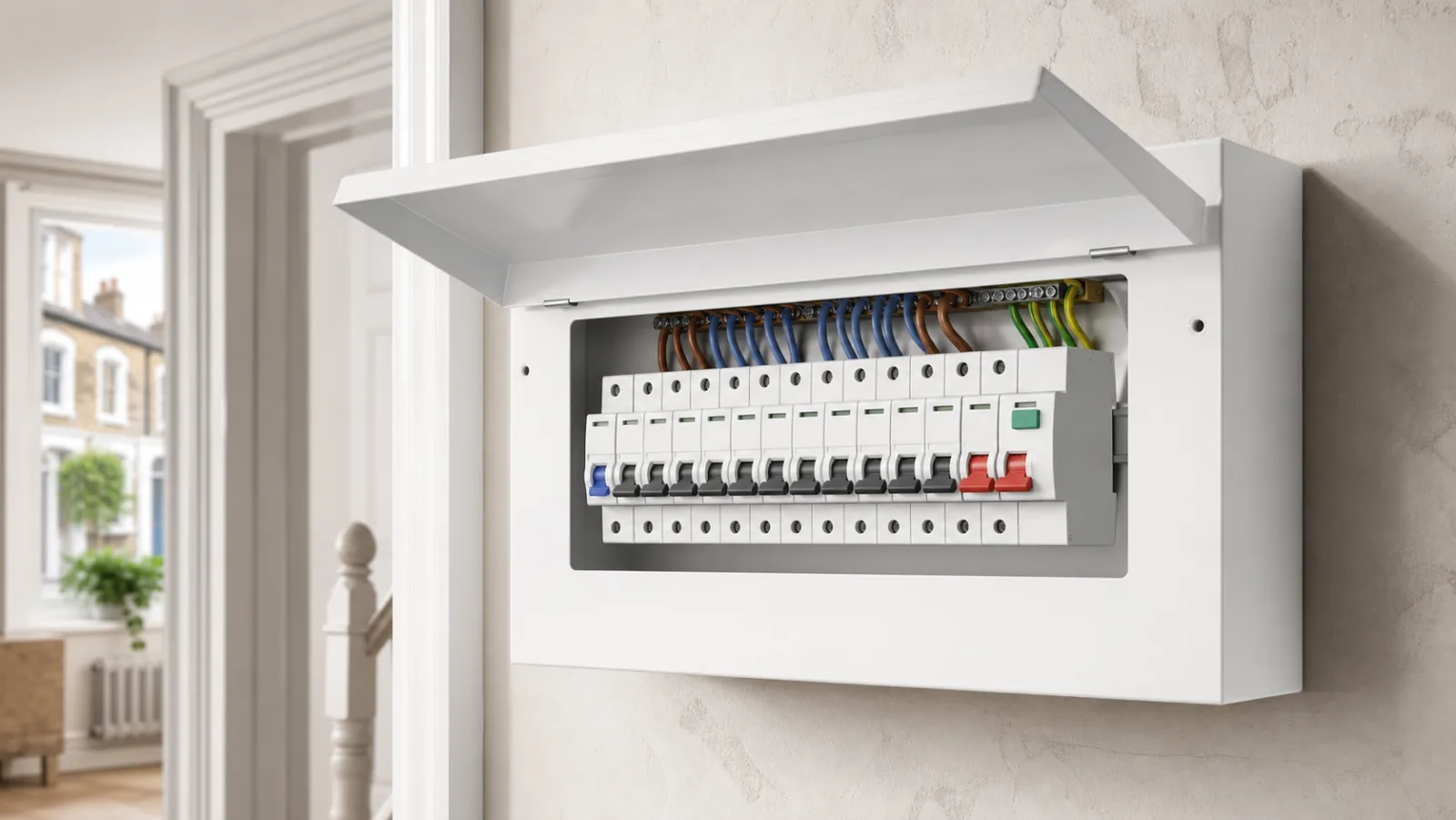
For London terraces and compact flats, that matters. A nuisance trip on a kitchen appliance should not necessarily take out half the home. A lighting fault should not leave the resident investigating in the dark. RCBOs are also helpful when an electrician is diagnosing older wiring, because the affected circuit is more obvious.
The catch is that pre-populated boards can encourage generic thinking. Your home may not need the breaker mix supplied in a bundle. A proper quote should still map every existing circuit, account for electric shower or cooker loads where present, and confirm whether any spare ways remain. If you are also doing DIY drilling or small works, do not treat the new board as permission to guess cable routes; start with our guide to wire detectors for DIY drilling in London flats and use a qualified electrician where fixed wiring is involved.
4. Schneider Electric Easy9+: best installer-specified blank-board route
Schneider Electric Easy9+ is the option to consider when your electrician wants a mainstream blank board platform and will specify the devices separately. A Schneider Easy9+ 12-way product listing describes an all-metal Amendment 3 style enclosure, a conventional busbar system, rigid raised DIN rail, a tool-removable busbar guard, surface mounting, and the need to buy incoming devices separately. That is not a weakness if the installer is doing the design properly. It can be a strength because the final arrangement is not forced by a pre-populated kit.
The Easy9+ route suits jobs where the electrician is already designing around constraints: limited cupboard depth, awkward cable entry, a desired split-load layout, or a very specific RCBO/SPD plan. It is also a sensible conversation when the homeowner wants a clean mainstream board but does not need the larger Hager ecosystem.
The risk is an under-specified quote. "Schneider board" is not enough detail. Ask what incomer is included, whether the protection devices are Type A where appropriate, whether a Type 2 SPD is included, how many spare ways are left, and whether the final circuit chart will be fixed inside the unit or handed over separately.
RCBO versus split-load: the decision that matters more than the logo
The brand on the lid matters less than the protection layout. A split-load board groups several MCB-protected circuits behind one or more RCDs. It is usually cheaper in hardware terms, and it can still be acceptable when designed carefully. The downside is fault grouping: one earth-leakage fault can disconnect several circuits at the same time.
An RCBO board gives each circuit its own combined RCD and overcurrent protection. This usually improves circuit separation and fault finding. In London homes, that is useful because residents often rely on one small property for everything: cooking, work, heating controls, broadband, security, and charging. Better separation can reduce the disruption from one faulty appliance or damp external circuit.
There is no universal answer without inspection. Old wiring can contain borrowed neutrals, insulation problems, undocumented junctions, or circuit alterations that change the plan. That is why a good electrician will test before finalising the board design. For plug-in temporary protection during DIY tool use, see our guide to RCD plug adaptors for London flats, but do not confuse a plug-in adaptor with a properly designed consumer unit.
Surge protection and spare ways should be quoted clearly
A Type 2 surge protection device is now a normal part of the consumer unit conversation. It helps protect the installation and connected equipment from transient overvoltages, though it is not a magic shield for every electronics failure. In practice, London homeowners should ask one simple question: "Is an SPD included, and if not, why not?" The answer should be written into the quote.
Spare ways are just as important. A board that is full on day one can make future work more expensive. Leave headroom for realistic additions: kitchen changes, smart heating controls, better extract ventilation, alarm circuits, home-office circuits, or outdoor lighting. If a terrace might later add an EV charger or heat-pump-related electrical work, the consumer unit discussion should also cover supply capacity and load assessment, not just physical space in the board.
EICR context, paperwork, and London fire-safety signals
A consumer unit replacement often appears after an Electrical Installation Condition Report, a property purchase survey, or a landlord compliance check. GOV.UK guidance for electrical safety standards in rented homes says rented properties in England must have their electrics checked at least every five years by a properly qualified person, with proof given to tenants. Owner-occupiers are not in the same position, but EICR-style testing is still useful before spending money on a board.
London Fire Brigade electrical safety advice tells residents to watch for scorch marks, flickering lights, hot plugs or sockets, fuses blowing, and circuit-breakers tripping for no obvious reason, and to get concerns checked by a qualified electrician. Those signs do not automatically mean "replace the consumer unit today", but they do mean the upgrade should be diagnostic, not cosmetic.
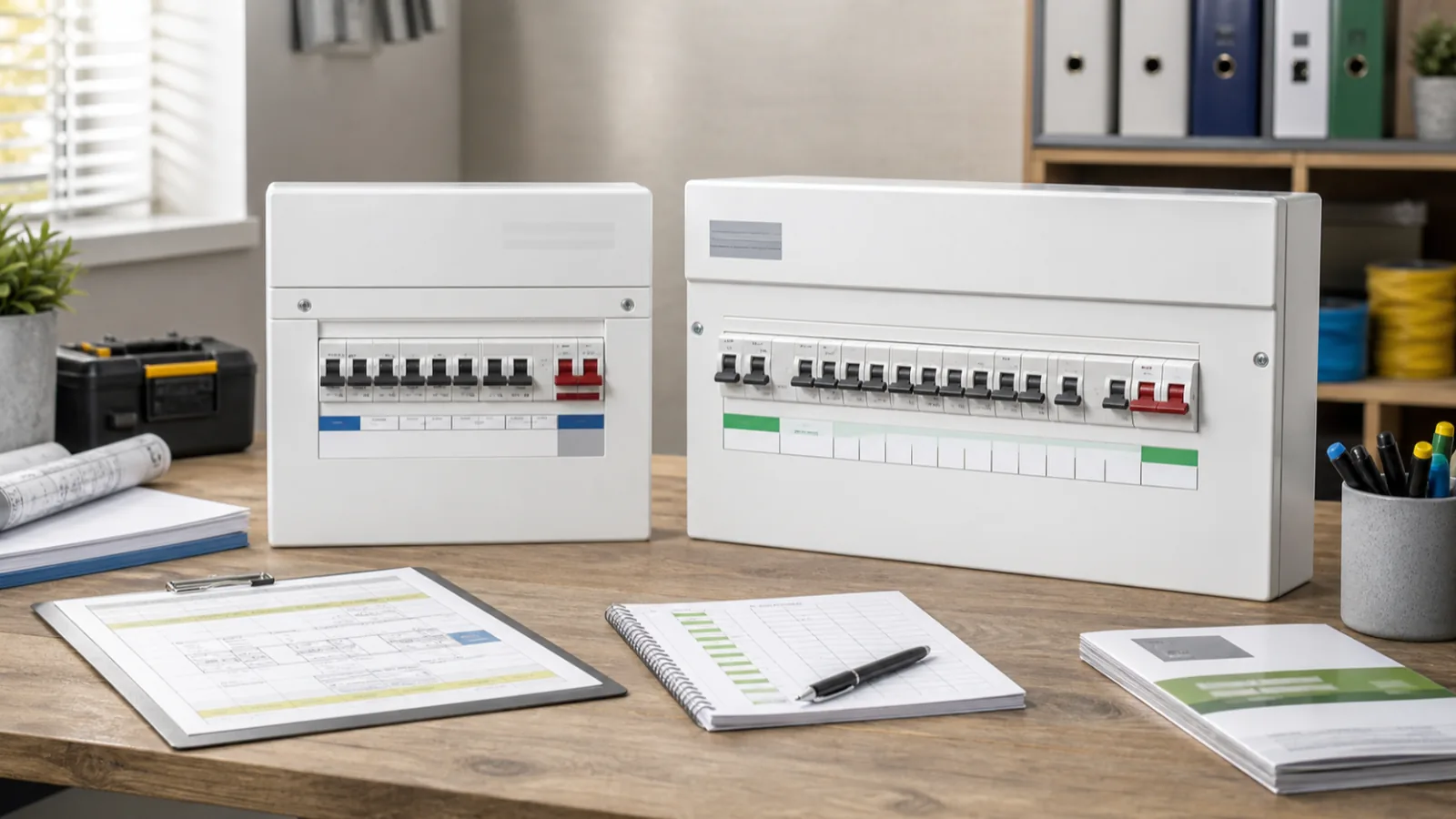
Paperwork is the homeowner's proof that the job was completed properly. Ask for the appropriate electrical certificate, test results, circuit schedule, board labels, product data, warranty information, and Building Regulations notification where applicable. GOV.UK's competent person scheme guidance explains how authorised schemes can self-certify certain building work instead of separately seeking building regulations approval. If your electrician cannot explain how certification works, keep looking.
Disruption: what London homes should expect
A consumer unit replacement normally means power off, access to the board, access to circuits for testing, and some time spent identifying what each breaker actually controls. In a compact flat, this can be awkward because the board may sit in a hallway cupboard, a shared meter area, or behind storage. In a terrace, older alterations can make circuit tracing slower than expected.
Do not accept a quote that assumes the wiring is perfect. The electrician may discover faults that need remedial work before a new board can be energised safely. Meter tails, main earthing, bonding, service head access, and isolation arrangements may also need coordination. Leaseholders should check access rules for communal cupboards and whether the freeholder or managing agent has any notification requirements.
If you want backup after the upgrade, electrical emergency cover can still have a role for callouts and fault attendance, but it is not a substitute for proper installation work. We explain that distinction in our guide to electrical emergency cover.
How to choose from the shortlist
Choose Hager Design10 or Design30 if you want the strongest board ecosystem conversation and your electrician values wiring room, accessories, and a tidy long-term layout. Choose Wylex NM if the quote is a sensible high-integrity design and you want familiar UK trade hardware without insisting on every circuit being RCBO-protected. Choose FuseBox if an RCBO-first populated board gives you the best balance of circuit separation and value. Choose Schneider Easy9+ if your electrician is specifying the devices carefully and wants a flexible blank-board platform.
In every case, the deciding factor is the installed design, not the catalogue name. The winning quote should say what protection devices are used, whether SPD is included, how many spare ways remain, how the circuits will be labelled, what paperwork you receive, and what happens if testing finds a fault.
FAQ
Is it worth upgrading an old fuse box if it still works?
Often, yes, but only after inspection. An old fuse box may still supply power, but modern boards can offer RCD or RCBO protection, clearer labelling, and better fault isolation. The electrician should test the installation first because a new consumer unit does not make poor wiring healthy.
Is a full RCBO board always required?
No. A full RCBO layout is usually the premium practical choice for circuit separation, but a high-integrity board may be a reasonable compromise. The right answer depends on circuit count, wiring condition, budget, and how disruptive a shared RCD trip would be in the home.
Should landlords replace the consumer unit after an unsatisfactory EICR?
Not automatically. The EICR observations should drive the remedial plan. Some issues are wiring faults, bonding problems, damaged accessories, or missing documentation rather than the board alone. A new consumer unit may be part of the fix, but it is not a universal cure.
How many spare ways should a new board have?
There is no single number, but a board filled to capacity is poor planning. Ask the electrician to show the final circuit schedule and identify spare usable ways. A London flat may only need modest headroom, while a terrace planning kitchen upgrades, external lighting, or future higher-load equipment should leave more.
Can I buy the consumer unit myself and ask an electrician to fit it?
You can ask, but many electricians prefer to supply the board because they are responsible for compatibility, certification, warranty, and final testing. If you buy the unit, you may choose the wrong device mix or enclosure. For this job, the electrician's design responsibility is worth more than saving a little on hardware.