Smart Radiator Valves for London Flats
Editorial scope: this London LEC guide is based on manufacturer product information, public heating-control guidance and practical fit criteria for London flats. We have not carried out hands-on installation, bench testing or energy-use measurement for these products.
Smart radiator valves can be useful in London flats, but they are not a universal upgrade. Their value comes from room-by-room control: a bedroom that should cool down earlier, a living room that needs heat in the evening, or a home office that should warm up before the rest of the flat. If every room already follows the same useful schedule, a better central thermostat may be simpler.
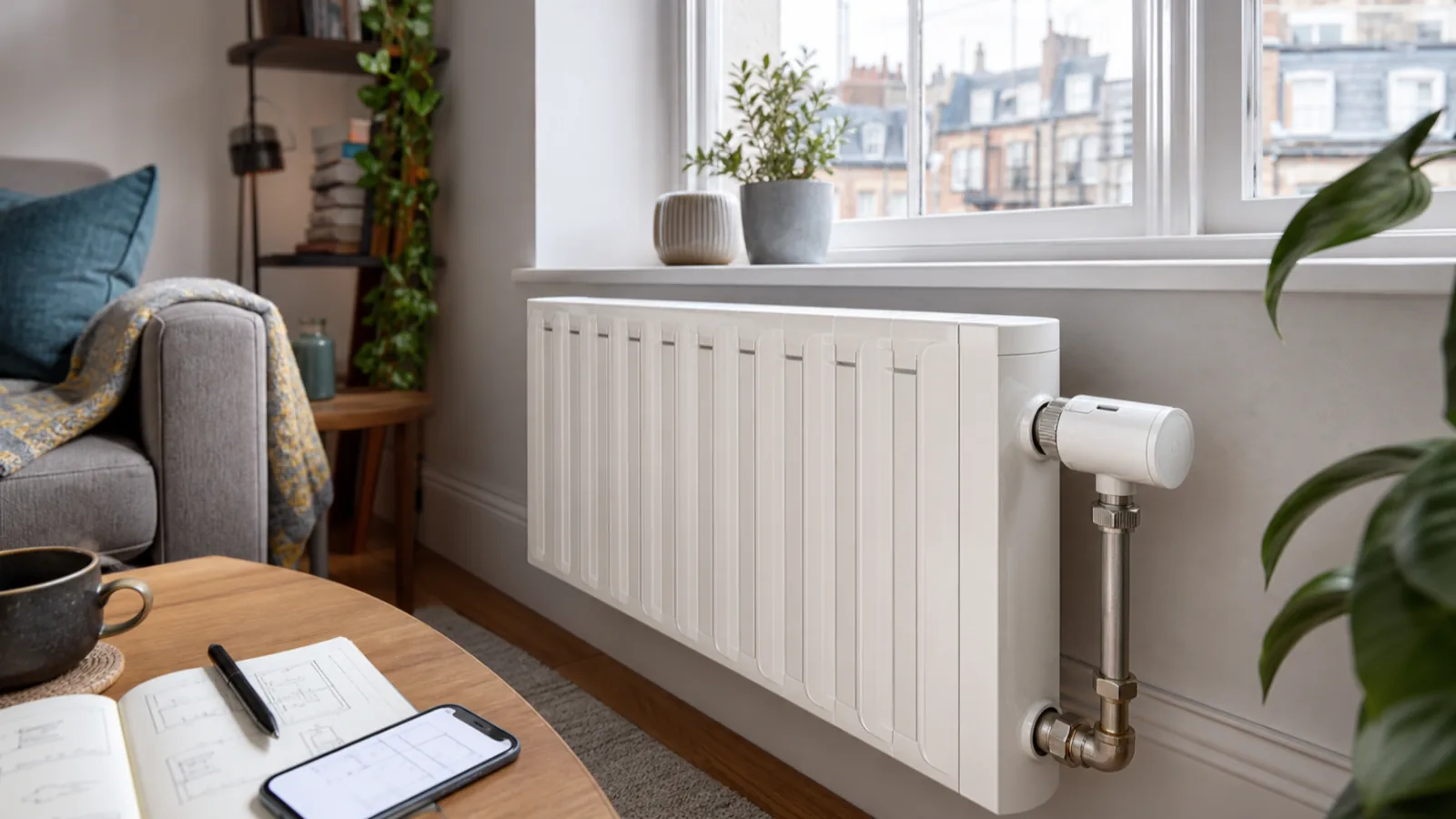
The first decision is physical, not digital. London flats often have mixed radiator ages, tight corners, radiator covers, low windowsills, converted layouts and older pipework. A smart radiator head may be easy to twist on in one room and awkward in the next. Before comparing apps, check the valve body, the adapter requirement, the battery door, and whether a hub can reach the radiator.
London LEC may earn commission from selected links, but our editorial approach starts with fit and risk. You can read more on our about page and editorial policy.
The Short Verdict for London Flats
Buy smart radiator valves when you have a real room-control problem. They make the most sense when different rooms need different schedules, when one radiator overheats a space, or when a bedroom should stay cooler than a living area. They are less persuasive when a small flat heats evenly from one central schedule.
The Energy Saving Trust treats heating controls, including thermostats, programmers and radiator controls, as part of using heating more efficiently rather than as magic bill-cutting devices source. That framing is important. Smart radiator valves are controls. They do not add insulation, fix poor radiator sizing, replace boiler servicing or solve draughty sash windows.
If you are early in the decision, compare this guide with our broader shortlist of smart radiator valves and our comparison of smart TRVs vs room thermostats.
Start with the Valve Body
Most smart radiator valves replace the removable head on an existing thermostatic radiator valve. That is different from replacing the metal valve body connected to the pipe. If your radiator already has a TRV, the smart head may fit directly or with an adapter. If it has a plain manual wheel-head valve, you may need a heating engineer to replace the valve body before a smart head can work.
For each radiator, photograph the current valve head, the exposed pin if you can remove the head safely, the pipe angle and the clearance around furniture. Check whether the valve is angled, straight, boxed in, behind curtains or under a deep sill. A product that looks compact online can still be annoying if the battery cover faces a wall or the display points at the floor.
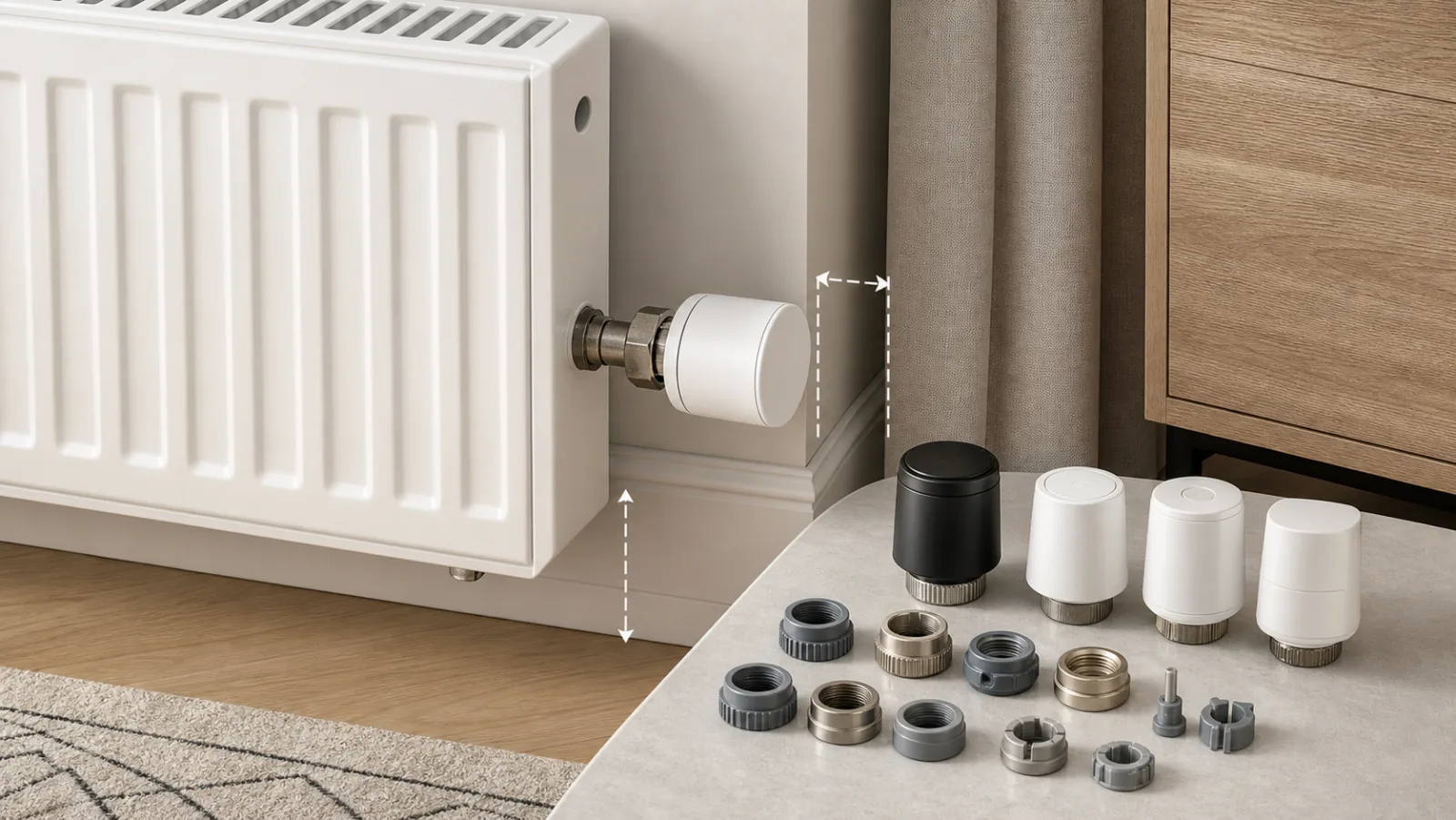
Adapters matter. Some systems include adapters for common valve bodies; others sell or recommend them separately. M30 x 1.5 fittings are common, but London flats can surprise you with older Danfoss-style fittings, mixed replacements after renovations, or one radiator that differs from the others. If even one key room needs a plumber, the total cost changes.
Rented Homes and Leasehold Flats
Renters should treat smart radiator valves as reversible only when they are replacing removable TRV heads and keeping the originals. Do not replace valve bodies, alter boiler wiring or change a landlord-owned thermostat without written permission. If the heating is part of a communal or managed system, the limits may be tighter.
Leaseholders should also check boundaries. A valve head inside the flat is usually easier to reason about than a boiler, communal heating riser or building-wide control. If heat is supplied through a communal system, individual smart radiator valves may still change radiator flow in the flat, but they may not give the same boiler-demand behaviour as a private combi boiler.
For DIY work around radiator pipes, walls and nearby sockets, do not treat a smart-heating project as isolated from the rest of the flat. If you are drilling for shelves, trunking or cable management near a radiator, read our guide to wire detectors for DIY drilling in London flats. If you are using temporary powered tools during heating work, our RCD plug adaptor guide explains the limits of portable protection.
Boiler Control Is the Make-or-Break Detail
A smart radiator valve can close or open an individual radiator. That does not automatically mean it can call the boiler for heat. The cleanest setup links radiator schedules with a compatible central thermostat, receiver, bridge or hub so the heating system understands demand.
Without that link, the central thermostat may still decide when the boiler fires. A smart valve in a bedroom can reduce overheating by closing that radiator, but it may not wake the boiler when only that room needs heat. In some layouts, this is fine. In others, it creates confusing behaviour: valves ask for warmth, the boiler follows a hallway thermostat, and the cold room stays behind.
Keep at least one safe heat path in mind. Some heating systems need a bypass radiator or bypass valve so water can circulate when valves close. If you are unsure, ask a qualified heating engineer before fitting smart heads across every radiator.
Product Fit Notes
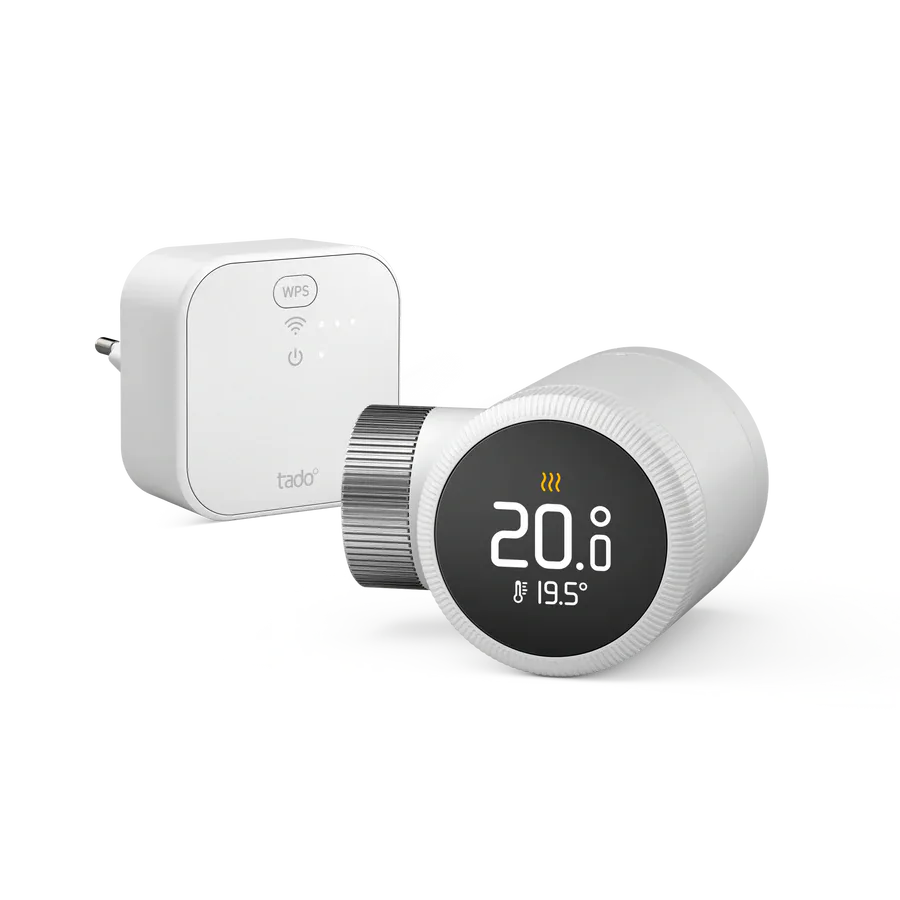
This is not a ranked hands-on test. It is a fit-focused editorial comparison of products London readers are likely to encounter.
| Product | Strongest fit signal | Check before buying |
|---|---|---|
| tado Smart Radiator Thermostat | Good fit for app-led room scheduling and households already considering the tado ecosystem | Confirm the exact bridge or thermostat requirement for your chosen tado generation |
| Drayton Wiser Radiator Thermostat | Strong fit for Wiser heating systems and multi-room zoning | Confirm Wiser hub compatibility, adapter support and signal path |
| Hive Radiator Valve | Sensible for homes already using Hive heating controls | Confirm existing TRVs; Hive says compatible TRVs are needed before fitting |
| Netatmo Smart Radiator Valve | Useful where Netatmo thermostat or starter-pack compatibility is already planned | Confirm the required Netatmo thermostat or starter pack and radiator compatibility |
The tado Smart Radiator Thermostat is most attractive when you want room schedules, app control and a broader smart-heating ecosystem rather than a standalone valve head source. For London flats, the main question is not whether the app is polished; it is whether every radiator you care about can join the same control plan cleanly.
The Drayton Wiser Radiator Thermostat is positioned around independent room control, app scheduling and use within the Wiser system source. Wiser is especially worth considering if you want a heating-control system that can grow from a thermostat and hub into room-by-room control. The practical checks are hub placement, adapter fit and whether the valve will be easy to boost manually.
The Hive Radiator Valve is a natural shortlist option for readers already looking at Hive heating controls. Hive states that radiators need existing TRVs before Hive Radiator Valves can be installed source. That one detail should shape the buying decision. If your rented flat has manual valves, do not assume this is a quick swap.
The Netatmo Smart Radiator Valve is best treated as part of a Netatmo heating setup, not as an isolated accessory. Netatmo's product page describes additional smart radiator valves as requiring a compatible Netatmo thermostat or starter pack, with adapters for hot-water radiators source. That makes it a good candidate when you are already choosing Netatmo, but less obvious if you want one experimental valve in a single room.
For a deeper Hive-specific context, see our Hive heating controls review.
Wireless Range and Battery Access
Wireless reliability is easy to underestimate. London flats can have thick party walls, steelwork, foil-backed insulation, awkward boiler cupboards and routers placed far from radiators. A hub in the hallway may reach every room in a small new-build flat but struggle in a converted property with a rear extension or split-level layout.
Before buying a multi-pack, think like an installer. Where will the hub sit? Is there a socket nearby? Does the signal need to pass through a kitchen, bathroom wall or metal radiator cover? Does the ecosystem use Wi-Fi directly, a bridge, Zigbee, Thread or a proprietary radio link? The label matters less than whether the manufacturer explains the hub requirement clearly and whether you can place the hub centrally.
Battery access is a daily-life issue, not a minor specification. A smart radiator valve that needs batteries changed behind a sofa, curtain, nursery cot or radiator cabinet will become irritating. Check whether the battery compartment opens from the top, side or front. Also check whether the valve display and manual control are readable after fitting, not just when held in your hand.
Heat-Loss Quirks in London Flats
Room-by-room control works best when the rooms are genuinely different. A top-floor bedroom under a cold roof, a bay-window living room, a rear room with single glazing and a warm internal hallway may all behave differently. Smart radiator valves can help schedule those spaces separately, but they cannot remove the underlying heat loss.
Open-window detection can be useful, but it is not a cure for draughts. If a room cools rapidly after the radiator switches off, you may need draught-proofing, curtains, glazing improvements or a radiator-output review before expecting smart controls to transform comfort. In some flats, the most valuable setting is a lower bedroom temperature and a calmer preheat period rather than aggressive on-off control.
Also watch thermostat placement. If the main thermostat sits in a warm hallway, colder rooms may never get enough heat unless the radiator valves and boiler controls are coordinated. If it sits in a cold room, the rest of the flat may overheat. This is why smart radiator valves should be planned with the central control, not added blindly.
When a Central Thermostat Is Enough
A central thermostat is often enough for a compact flat with one main living pattern, even temperatures and no serious room-by-room conflict. If you live alone in a one-bedroom flat and heat the whole space at similar times, a modern thermostat and sensible schedule may be easier to live with than three smart radiator heads.
Choose the thermostat-first route when the heating problem is simple: the whole flat starts too early, runs too late, or lacks a clear schedule. Choose smart radiator valves when the problem is uneven: the bedroom overheats, the home office is cold, or one room needs heat while another should stay off.
If you are deciding between the two routes, start with the control goal. Comfort in one troublesome room points toward smart radiator valves. Cleaner whole-flat timing points toward the central thermostat. Lower bills may come from either route, but only when the controls match how the home actually loses heat and how you use each room.
Buying Checklist Before You Order
Use this checklist before buying a single valve or a multi-pack:
- Confirm each radiator has a compatible thermostatic valve body or identify where an engineer is needed.
- Check adapter support for every radiator, not just the easiest one.
- Confirm whether the system needs a hub, bridge, receiver, room thermostat or boiler controller.
- Plan where the hub will sit and whether the wireless signal can reach the farthest radiator.
- Check battery access after the valve is installed in its real position.
- For rented homes, get permission and keep original valve heads.
- Avoid controlling every radiator until you understand bypass and boiler behaviour.
- Compare current product pages and support documents before assuming an old kit review still applies.
A smart radiator valve is a good buy when it solves a specific room problem and fits the heating system cleanly. It is a weak buy when it adds hardware to a flat that only needed a better central schedule.
FAQ
Do smart radiator valves save money in London flats?
They can help reduce wasted heating when rooms need different schedules, but savings depend on insulation, heat loss, boiler control and user behaviour. Treat savings claims as conditional, not guaranteed.
Can I fit smart radiator valves myself?
You may be able to fit the smart head yourself if the radiator already has a compatible TRV body. Replacing a valve body is plumbing work and may require draining part of the system, so many readers should use a qualified installer.
Do I need one smart valve on every radiator?
No. Start with the rooms that have a real control problem. Bedrooms, home offices and overheated living rooms are better candidates than hallways or rooms that already behave well.
What happens if the wireless connection drops?
Most smart radiator valves should retain some local behaviour, but app control and coordinated scheduling may be affected. This is why hub placement and signal range matter before you buy a multi-room kit.
Are smart radiator valves worth it for renters?
They can be worth it only when the change is reversible, permitted and limited to removable TRV heads. Renters should avoid any work involving boiler wiring, valve-body replacement or permanent changes without written approval.