Wire Detectors for DIY Drilling in London Flats
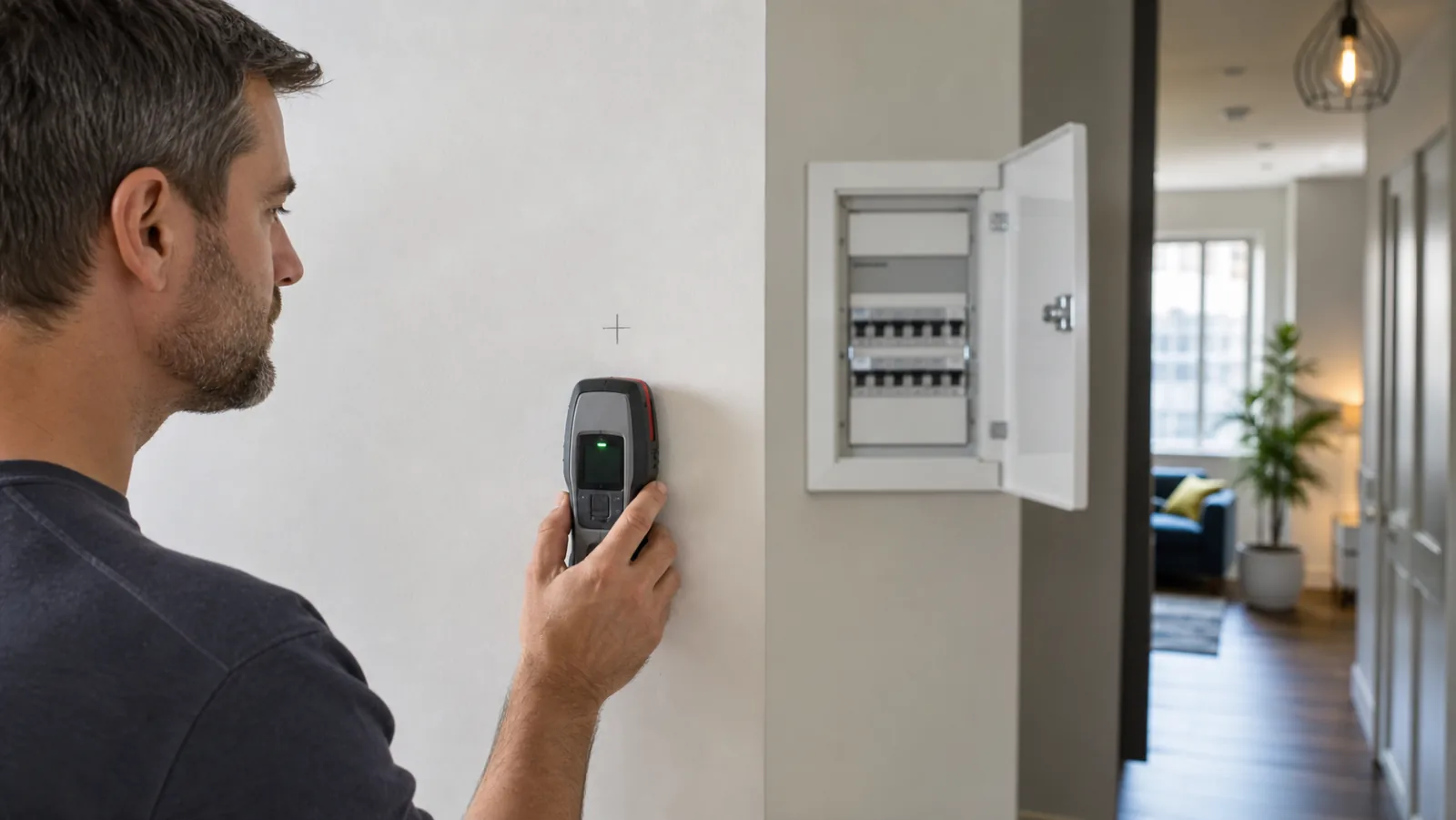
A shelf bracket, mirror, curtain rail, or TV mount can turn into an electrical problem if the drill meets a hidden cable. London flats add extra uncertainty: older wiring routes, altered partitions, boxed-in services, and walls shared with kitchens or bathrooms can make cable paths less predictable than a neat diagram suggests.
The useful way to think about wire detectors for DIY drilling is simple: they reduce risk, but they do not certify a wall as safe. A detector should help you decide where not to drill, when to rescan, and when to stop and call a qualified electrician.
Affiliate disclosure: Londonlec may earn a commission if you buy through selected links. Our editorial approach is explained on our editorial policy, and you can read more about the site on about Londonlec. This guide is based on manufacturer specifications and published safety guidance, not hands-on laboratory testing.
How to Choose Wire Detectors for DIY Drilling
A good fit starts with the job, not the product box. If you are putting a small picture hook into a clear plasterboard wall, you may need a simple scanner that warns for live wires and metal. If you are drilling near sockets, switches, radiators, pipe routes, or a wall that has been altered, you need a more cautious process and probably a better detector.
Homebuilding’s drilling safety guide warns that damaging a concealed live cable can create shock and fire risk, and it advises turning off relevant circuits before drilling near possible wiring. That is the baseline: scan first, switch off where appropriate, drill shallow where the fixing allows, and stop if the result is uncertain.
For London flats, prioritise four features:
| Priority | Why it matters before drilling |
|---|---|
| Live AC warning | Helps flag energised cables, but depth and wall material can affect results |
| Metal detection | Useful because cable protection, pipes, nails, and conduit may show as metal |
| Stud or wood detection | Helps on plasterboard partitions and stud walls |
| Clear calibration process | A badly calibrated scanner can give false confidence |
Do not buy on detection depth alone. A deep range is useful only if the device is reliable on the wall material in front of you. Painted plasterboard, masonry, tile adhesive, foil-backed insulation, damp walls, and old lath and plaster can all change readings.
Starting Point: Match the Detector to Your Wall
If the wall is modern plasterboard, a combined stud, metal, and AC detector is usually the most practical starting point. It lets you find studs for fixing strength while also checking for metal and possible live wiring.
If the wall is masonry or old plaster, a basic stud finder may be less useful. You want metal and live-wire detection, plus a cautious drilling method. If the wall is near a socket, switch, consumer unit, kitchen appliance, bathroom fitting, or boiler control, the safe answer may be to avoid DIY drilling or ask an electrician to inspect.
If you are already seeing electrical warning signs, such as tripping circuits, warm accessories, buzzing, flickering, burning smell, or damaged outlets, do not treat a consumer detector as a workaround. Start with our guide to electrical emergency cover and consider professional inspection before any drilling.
Shortlist by Fit, Not by Hype
This is not a ranking from direct testing. It is a practical shortlist based on published product specifications, safety use case, and likely fit for home DIY drilling.
Draper Wall Scanner 13818: Simple UK-Friendly DIY Scanning
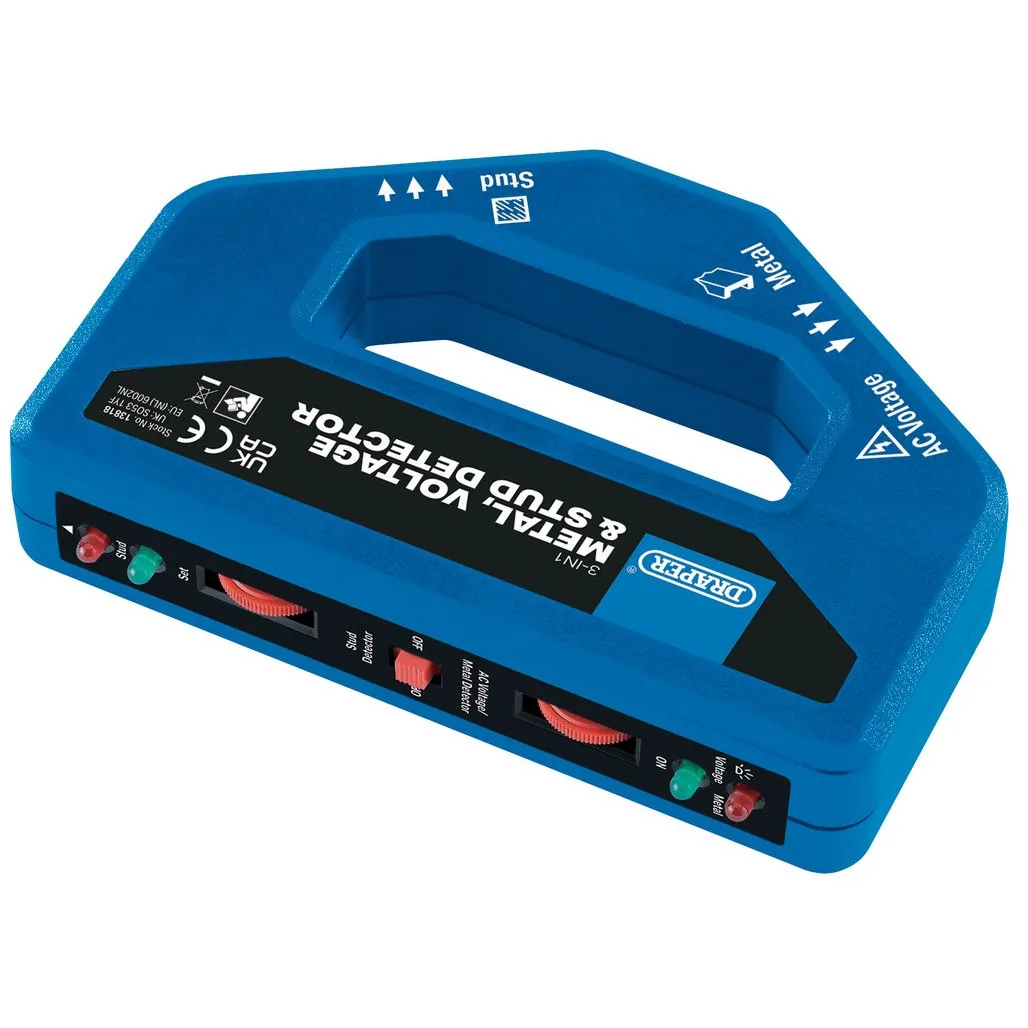
The Draper Wall Scanner 13818 is the straightforward option for someone who wants a basic combined detector without turning the job into a professional inspection setup. Draper lists detection for live or dead electricity cables, metallic water pipes, nails, other metal objects, and wood studs in partition walling. The stated maximum depth penetration is 27mm.
That makes it a sensible fit for lighter DIY tasks where the wall is likely to be plasterboard or a shallow partition, and where the user wants an audible and LED warning rather than a detailed display. It is not the tool to trust for complex masonry, unknown old walls, or any job where a missed cable would be high consequence.
Choose it when you need a simple scan before small fixings, you can test it on a known source first, and you are willing to abandon the drilling point if it indicates metal or wiring. Skip it if you need deeper detection, more detailed readouts, or confidence around unusual wall construction.
CTA: Check the current Draper Wall Scanner spec and availability before buying.
Laserliner MultiFinder Plus: Better for Clearer Display Feedback
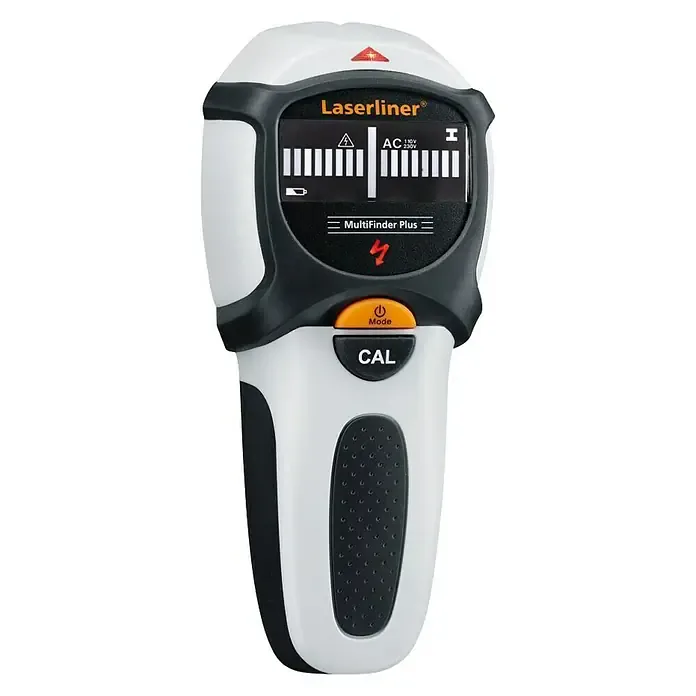
The Laserliner MultiFinder Plus is a stronger fit when you want a display-led scanner for wood, metal, and live-wire detection. The product page lists automatic calibration, optical and acoustic warning signals, permanent voltage warning, and a 110-230V measurement range. It also lists live-wire detection up to 40mm and metal detection ranges that vary by material.
For a London flat owner, the practical advantage is not just depth. It is the combination of multiple sensors, a readable display, and permanent voltage warning. That can help when a wall gives mixed signals and you need to rescan slowly from different directions.
Choose it if you want more feedback than a very basic LED scanner and you are working on varied DIY tasks across partition walls and ceilings. Skip it if you only need a one-off budget scan, or if the wall is old and irregular enough that you would not trust a consumer scanner anyway.
CTA: Check current Laserliner MultiFinder Plus details and retailer terms before buying.
Zircon MultiScanner HD900: Feature-Rich, but Check UK Fit Carefully
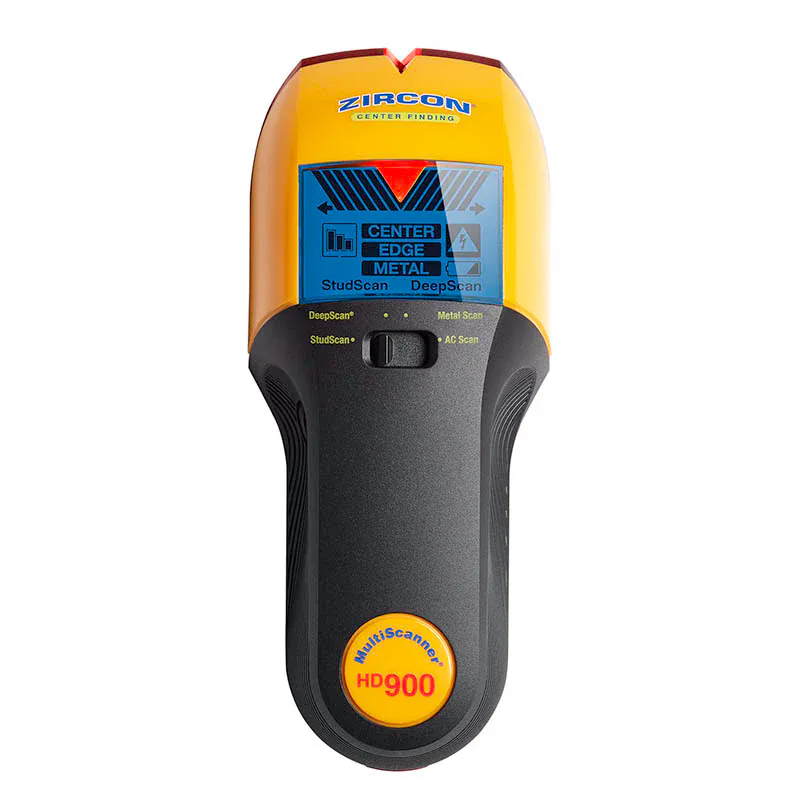
The Zircon MultiScanner HD900 OneStep is a feature-rich wall scanner. Zircon says it locates wood and metal studs, joists, metal, and live AC electrical wiring. It includes modes for StudScan, DeepScan, Metal Scan, and AC Scan, plus a display, pointer, audio tone, and signal strength indicator.
The important caveat is in Zircon’s own product information: sensing depth and accuracy can vary because of moisture, material content, wall texture, and paint, and the product is not recommended for lath and plaster. For London homes, that caveat matters. Some older flats and conversions have exactly the kind of wall construction where a consumer scanner should be treated cautiously.
Choose it if you want richer mode selection and you have confirmed the model, warranty, and retailer availability fit your market. Skip it for old lath-and-plaster walls, or where you need UK-specific support and returns more than a long feature list.
CTA: Check current Zircon HD900 market availability and warranty position before buying.
Decision Tree: Which Fit Makes Sense?
Use this decision path before you buy:
- If the wall is modern plasterboard and the job is light, start with a simple combined scanner such as the Draper.
- If you need clearer display feedback, multi-material detection, and 110-230V suitability, look at the Laserliner.
- If you want advanced scanner modes and have confirmed local availability, consider the Zircon, but respect its lath-and-plaster warning.
- If the wall is near kitchens, bathrooms, consumer units, added sockets, or outdoor wiring, stop and get professional advice.
- If the detector gives inconsistent readings, treat that as a warning, not an inconvenience.
For bigger electrical planning, a detector is only one small part of the picture. If you are already thinking about circuit capacity, protection, or a future board upgrade, read our guide to consumer unit upgrades for London homes.
What a Wire Detector Cannot Prove
A no-signal result is not a safety certificate. Consumer wall scanners can miss wiring because of depth, shielding, wall texture, moisture, calibration, dead circuits, or unusual cable routes. They can also show metal where the issue is conduit, capping, pipework, nails, or other hidden material.
This is why the right behaviour matters as much as the right tool:
- Test the detector on a known live area before relying on it.
- Scan slowly from more than one direction.
- Mark multiple readings, not just one point.
- Avoid drilling where metal or voltage is indicated.
- Turn off relevant circuits where appropriate.
- Use a depth stop if the fixing does not need a deep hole.
- Stop if the drill feels a material change, smells hot, sparks, or trips a circuit.
Part P and wider electrical safety rules matter when work moves beyond simple DIY fixings. Adding circuits, altering wiring in higher-risk locations, or working near consumer units is not the same as hanging a shelf.
London Flat Scenarios
Hanging shelves in a living room
A combined detector is useful if the wall is plasterboard and you need to locate studs as well as avoid wiring. Scan above, below, and beside your intended fixing point. If the wall is near a socket, assume cables may run vertically or horizontally from accessories, but do not rely on neat routing in older properties.
Mounting a mirror in a hallway
Hallways often contain switches, intercom wiring, alarm cables, or previous alterations. Use a detector with both metal and live-wire warning. If readings are inconsistent, use adhesive or freestanding alternatives where load allows.
Drilling near radiators or smart heating controls
Radiator pipework and control wiring can complicate scans. If your job relates to heating controls, start with the context in our smart radiator valves for London flats guide, then decide whether the wall work is genuinely DIY.
Working near a boiler or thermostat
Do not rely on a wall scanner alone around boiler controls, fused spurs, thermostats, and heating wiring. If you are choosing smart controls, our Hive heating controls review is a better starting point than drilling first and asking questions later.
Buying Checklist
Before you buy a wire detector, check these details:
- Does it explicitly detect live AC wiring?
- Does it detect metal as well as studs?
- What wall types does the manufacturer warn against?
- What is the stated detection depth for live wires, not just metal?
- Does it require manual calibration or automatic calibration?
- Does it give audible and visual warnings?
- Are batteries included or easy to replace?
- Is the warranty and return path practical in the UK?
- Are instructions clear enough that you will actually follow them?
If you cannot answer those questions from the product page, do not buy it for a safety-sensitive job.
FAQ
Are wire detectors for DIY drilling reliable?
They are useful, but not absolute. Reliability depends on wall material, depth, moisture, shielding, calibration, and the type of wiring. Treat a positive warning as a reason not to drill. Treat a negative reading as one input, not final proof that the wall is clear.
Can a wire detector find dead cables?
Some scanners advertise detection of live and dead electricity cables, usually by combining voltage and metal detection. Dead or disconnected cables can be harder to interpret because the live-voltage signal may be absent. Metal detection may still flag cable protection, conduit, or other objects.
Should I turn off power before drilling?
If you are drilling near likely wiring routes, turning off the relevant circuit is a sensible safety step. You should still scan first and avoid suspicious locations. If you cannot identify the circuit or the work is near higher-risk areas, stop and call a qualified electrician.
Can I drill if the detector shows metal but not a wire?
No. Metal could be pipework, cable protection, conduit, nails, or other hidden objects. Drilling into metal can still be dangerous or expensive. Move the fixing point or get the wall checked.
Is a wire detector enough for old London walls?
Often not. Older flats, conversions, and altered walls can have irregular wiring routes or lath-and-plaster construction. If the wall type is unknown or readings do not make sense, a consumer detector should push you toward caution, not confidence.
Title Candidates
- Wire Detectors for DIY Drilling in London Flats: How to Choose Before You Drill
- Before You Drill: 5 Checks for Choosing a Wire Detector
- A London Flat Owner’s Guide to Wire Detectors
- Why a Wire Detector Is Not a Permission Slip to Drill
- How to Choose a Wire Detector for Plasterboard, Brick, and Old Walls