Electrical Emergency Cover for London Homes
Electrical emergency cover for London homes is worth considering when a sudden electrical fault would leave you without essential power, lighting, heating controls, or safe use of key circuits. It can give you a phone number, a defined response process, and a way to limit the immediate callout cost. It is not, however, a magic policy for old wiring, overloaded sockets, DIY mistakes, failed inspections, landlord obligations, or planned upgrades.
This guide is a source-backed editorial review, not a hands-on test of emergency callouts. We looked at how home emergency cover is presented by providers such as HomeServe home emergency cover, British Gas cover, and 247 Home Rescue home emergency cover, then compared those patterns with consumer guidance from Citizens Advice on home emergency cover. We also apply a London lens: older terraces, converted flats, leasehold boundaries, private rented homes, and consumer units that may have been altered over decades.

For more on how London LEC approaches reviews, see our editorial policy and about page.
What electrical emergency cover usually means
Electrical emergency cover is normally designed for sudden, urgent problems that make part of your home unsafe or unusable. Examples may include loss of power to a circuit, unsafe sockets, failed internal wiring, or an electrical fault that needs a qualified engineer to make safe. The exact wording matters. Some plans sit inside broader home emergency cover, while others are part of a home care bundle with plumbing, heating, drains, or appliance-style support.
The key word is emergency. Cover is usually built around a rapid response to stop immediate disruption or danger, not around improving the property. A provider may send an electrician to identify the fault, restore power where possible, isolate a dangerous circuit, or complete a limited repair within the policy cap. That is different from paying for a new consumer unit, replacing aged wiring throughout a flat, correcting decades of poor alterations, or upgrading a rental property before an electrical safety certificate.
For London homes, this distinction matters because many faults are not random one-off events. A tripping circuit in a Victorian conversion might be caused by damp, rodent damage, mixed-age wiring, an old fuse board, or overloaded kitchen appliances. An emergency visit may get the home safe tonight. It may not answer whether the installation is fundamentally suitable.
When cover is a good fit
Electrical cover can make sense if your wiring is generally sound and you mainly want a support route for unexpected disruption. It is especially useful for owner-occupiers who would otherwise spend time searching for an emergency electrician during a stressful evening fault. If the policy has a clear claim limit, a manageable excess, and sensible emergency wording, the value is partly in convenience.
It can also suit landlords, but only as an added layer. A landlord cannot use emergency cover as a replacement for legal repair duties, electrical safety checks, or planned remedial work. In a rental, the cover may help with an urgent callout, but the tenancy context still decides who must arrange and pay for repairs.
Leaseholders should be more cautious. In a block, some electrical infrastructure belongs to the flat owner and some may be communal or managed by the freeholder. If the issue is in risers, communal intake equipment, hallway lighting, or building-wide supply, a normal domestic emergency policy may not help. Before buying, leaseholders should check their lease, service charge documents, and managing agent process.
Cover is most convincing when the home has a reasonably modern consumer unit, no known unresolved electrical defects, and no history of repeated nuisance tripping. If you have already had an electrician confirm the installation is in serviceable condition, an emergency policy becomes a practical backup rather than a substitute for basic safety.
When an inspection is better than cover
If you already know something is wrong, start with inspection, not insurance. Flickering lights, warm sockets, burning smells, regular breaker trips, old rubber wiring, damaged accessories, or visible DIY joins all point toward diagnosis. A policy may exclude pre-existing problems, gradual deterioration, or faults that were present before the cover began.
For drilling, mounting furniture, or working near concealed cables, cover is also the wrong first tool. Prevention is better. Our guide to wire detectors for DIY drilling in London flats explains why older conversions and refitted kitchens can be unpredictable behind walls.
The same applies if your home lacks modern RCD protection or has limited protection on socket circuits. Portable safety devices can help in narrow cases, but they do not make old wiring new. See our guide to RCD plug adaptors for DIY tools in London flats if the immediate concern is safer tool use rather than emergency cover.
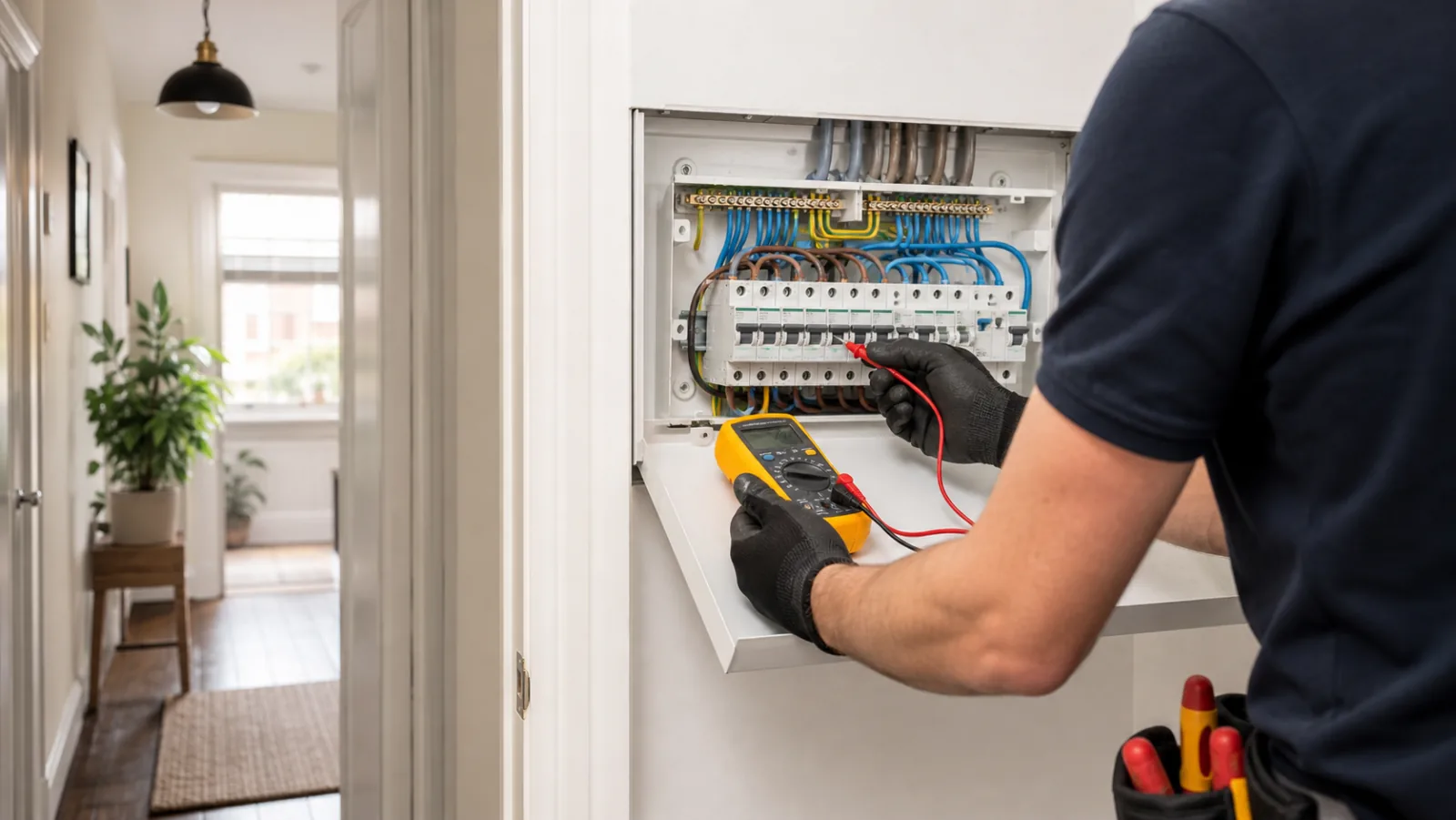
A proper inspection may also save money. If the electrician identifies one clear defect, fixing it directly may be cheaper than paying monthly for cover that later refuses a claim as pre-existing. If the installation is broadly obsolete, compare the cost of remedial work with our guide to consumer unit upgrades.
How to compare HomeServe, British Gas, 247 Home Rescue, and YourRepair
HomeServe electrical cover is often considered by people who want a recognisable home emergency provider and a defined assistance route. When reviewing HomeServe, check whether the product you are viewing is electrical-only or part of wider home emergency cover, what the claim limit is, whether parts and labour are included, and how the provider defines an emergency.
British Gas HomeCare is better known for boiler and heating support, but its wider cover pages may include combinations that go beyond heating. If you are considering British Gas for electrical help, do not assume a boiler-focused plan includes the electrical emergencies you care about. Read the package details and check whether internal electrics, repairs, callouts, and excess are included in the specific tier.
247 Home Rescue is another home emergency provider that presents cover across common household emergencies. The key questions are the same: what counts as an emergency, how quickly attendance is targeted, what happens if parts are required, what the annual or per-claim cap is, and whether there is an excess. Look closely at cancellation terms and any waiting period before claims can be made.
YourRepair/Home Emergency cover is often compared by shoppers looking for fixed monthly home support. With YourRepair or similar home emergency plans, pay attention to whether the electrical element is a core feature or an optional part of a broader bundle. Also check whether the provider uses its own network, appointed contractors, or third-party emergency engineers.
The provider name is less important than the policy wording. A cheaper plan can be reasonable if it covers the exact risk you have. A more expensive plan can disappoint if it excludes the situation most likely in your property.
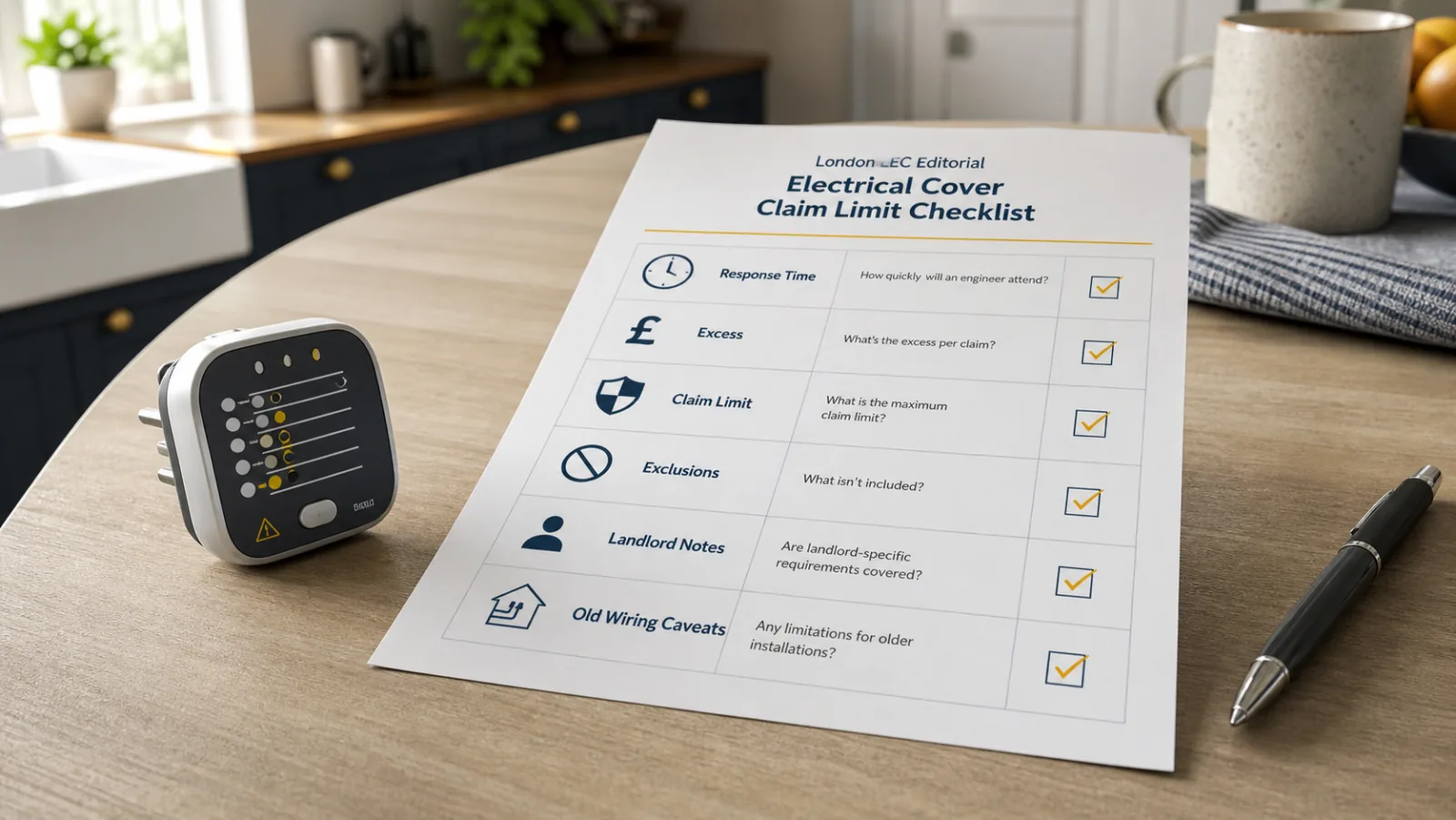
The seven details London readers should check
First, check the claim limit. Some plans cap each claim, while others cap annual claims or set different limits for parts and labour. London labour rates can be high, so a low cap may only cover diagnosis and a limited repair.
Second, check the excess. A low monthly price with a high excess may still be sensible for rare emergencies, but it is not the same as a low-cost repair plan. Compare the total likely cost of one claim, not just the monthly headline.
Third, check response time wording. “Emergency” does not always mean immediate attendance. The provider may use phrases such as aim, target, or subject to availability. For vulnerable occupants, medical equipment, or homes where electrical failure affects heating controls, response wording matters.
Fourth, check exclusions for pre-existing faults. If you have already noticed tripping, buzzing, scorch marks, or repeated outages, document the issue and speak to a qualified electrician. Buying cover after symptoms appear may not protect you.
Fifth, check wiring age and condition. Older London homes may have extensions, conversions, partial rewires, and mixed standards. A policy can cover sudden failure, but it may exclude deterioration or installations that do not meet reasonable safety expectations.
Sixth, check landlord and tenant responsibilities. Tenants should normally report faults to the landlord or managing agent first. Landlords should not rely on tenant-purchased cover to discharge repair duties. If a tenant buys cover independently, the engineer may still need landlord approval for some work.
Seventh, check leasehold boundaries. A fault inside your flat may be yours. A fault in communal infrastructure may belong to the freeholder, building manager, or network operator. Emergency cover for a single dwelling may not pay for building-wide issues.
What cover usually will not do
Electrical emergency cover is not the same as an Electrical Installation Condition Report. It will not certify a rental property. It will not normally fund a planned consumer unit replacement just because the current board is old. It is unlikely to cover cosmetic improvements, extra sockets, smart home upgrades, outdoor lighting projects, or rewiring because you are renovating.
It may also fall short where the root cause is not internal domestic wiring. Power cuts caused by the local network, metering equipment, supplier issues, or communal block systems can sit outside normal home emergency cover. In those cases, the right contact may be the electricity network operator, energy supplier, landlord, or building manager.
If your main worry is safety rather than inconvenience, spend money on the basics first: working smoke alarms, heat alarms where appropriate, safe socket use, and professional inspection. Our guide to smoke and heat alarms for London flats is a better starting point if you are reviewing overall home safety.
A practical buying checklist
Before you buy, write down the actual risk you want covered. “Electrical emergency” is too vague. Do you worry about losing power to the whole flat, a failed lighting circuit, a dangerous socket, heating controls losing power, or being unable to find an electrician at night?
Then compare four numbers: monthly cost, excess, per-claim limit, and annual limit. A plan with a slightly higher monthly cost may be better if the excess is lower and the claim cap is realistic. A plan with a low headline price may be fine if you only want a last-resort callout route.
Next, read the waiting period, cancellation terms, and exclusions. Look for wording around pre-existing faults, poor maintenance, old installations, inaccessible wiring, shared systems, and non-standard properties. If you live in a flat above commercial premises, a converted house, or a building with communal supply areas, ask the provider before buying.
Finally, compare current offers carefully. Our page on electrical cover offers worth checking is the place to track deal-led options, but a discount should never override the policy wording.
Example London scenarios
A homeowner in a 1990s flat with a modern consumer unit and no known issues may be a good fit. The main value is convenience if a socket circuit fails or lights go out unexpectedly. Cover is a backup plan, not a repair strategy.
A leaseholder in a converted Victorian house with repeated tripping should book an electrician first. If the same circuit trips every week, the issue may be damp, damaged cable, overloaded appliances, or an installation defect. Cover bought after repeated symptoms may not help.
A landlord with several flats may find emergency cover useful for response coordination, but only alongside proper maintenance and electrical safety compliance. The landlord should still keep inspection records, respond to tenant reports, and fund necessary remedial work.
A tenant whose lights fail should report the fault through the landlord or agent process first, especially if the tenancy agreement requires it. Buying personal cover may add confusion if the provider needs authority to work on fixed wiring.
An owner renovating a kitchen should not buy emergency cover as a way to fund electrical changes. Planned work, added circuits, new sockets, and compliance upgrades belong in a quoted electrical job.
Frequently Asked Questions
Does electrical emergency cover replace an inspection?
No. Cover can help with response costs, but it does not replace proper inspection, testing, or remedial electrical work.
What should readers check first?
Check exclusions, maximum claim value, response promise, excess, and whether pre-existing faults or old wiring are limited.
Verdict: cover is useful, but only after the basics are sound
Electrical emergency cover for London homes is most useful when the property is already reasonably safe, the main concern is sudden disruption, and the policy terms match the kind of fault you realistically expect. It can reduce stress when something fails out of hours, and it can make budgeting easier if the claim limit and excess are clear.
It is a poor fit when the home has known defects, old wiring that needs inspection, repeated faults, unclear leasehold boundaries, or landlord obligations that have not been addressed. In those cases, an electrician’s inspection, remedial quote, or building-management route should come before a monthly cover plan.
For most London readers, the best approach is simple: inspect first if there are symptoms, cover later if the installation is sound and you want emergency support. Compare HomeServe, British Gas HomeCare, 247 Home Rescue, and YourRepair on wording rather than brand familiarity, then keep a copy of the policy details somewhere you can find during an actual power problem.