Electrical Cover Offers Worth Checking Before You Buy
This is an editorial savings guide, not a hands-on test of emergency callouts. London LEC reviewed how electrical and home emergency cover offers are presented by major UK providers, then applied a practical property-risk lens for London homes, flats, terraces, rentals, and leasehold buildings.
Electrical cover offers worth checking have one thing in common: the saving still makes sense after you read the boring parts. A half-price first year, voucher code, introductory month, or bundled home emergency deal can look useful on the landing page. It becomes much less useful if the plan has a high excess, tight claim cap, unclear renewal price, awkward callout rules, or exclusions that match the exact fault your home is likely to have.
This matters because electrical cover is not the same as improving your wiring. Most offers are designed to give you a response route for a sudden emergency. They are not there to fund a consumer unit upgrade, rewire a tired flat, fix historic DIY alterations, or make a rental property compliant. If you already suspect an underlying defect, our guide to electrical emergency cover is a better starting point before you compare deals.
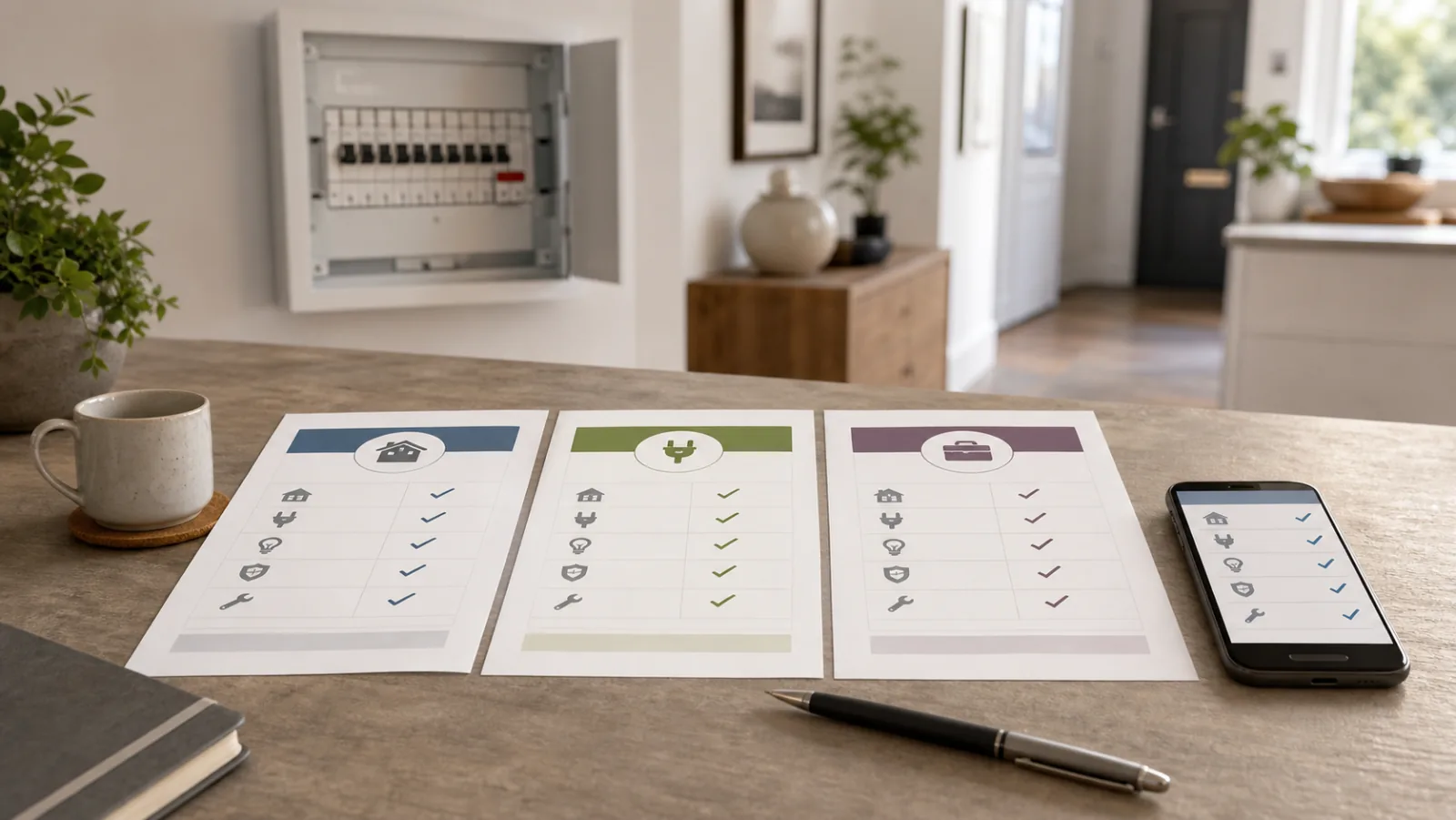
For transparency, London LEC covers this topic as source-backed buying advice. You can read more about our review scope on about London LEC and how we handle affiliate-led recommendations in our editorial policy.
The offer is only the first number
The headline discount is usually the easiest part of the decision. The renewal price is harder, and often more important. If a plan is cheap for the first year but renews at a level you would not accept, the saving is temporary. That is not automatically bad, but it changes the calculation. You need to know whether you are buying a long-term service relationship or a one-year stopgap.
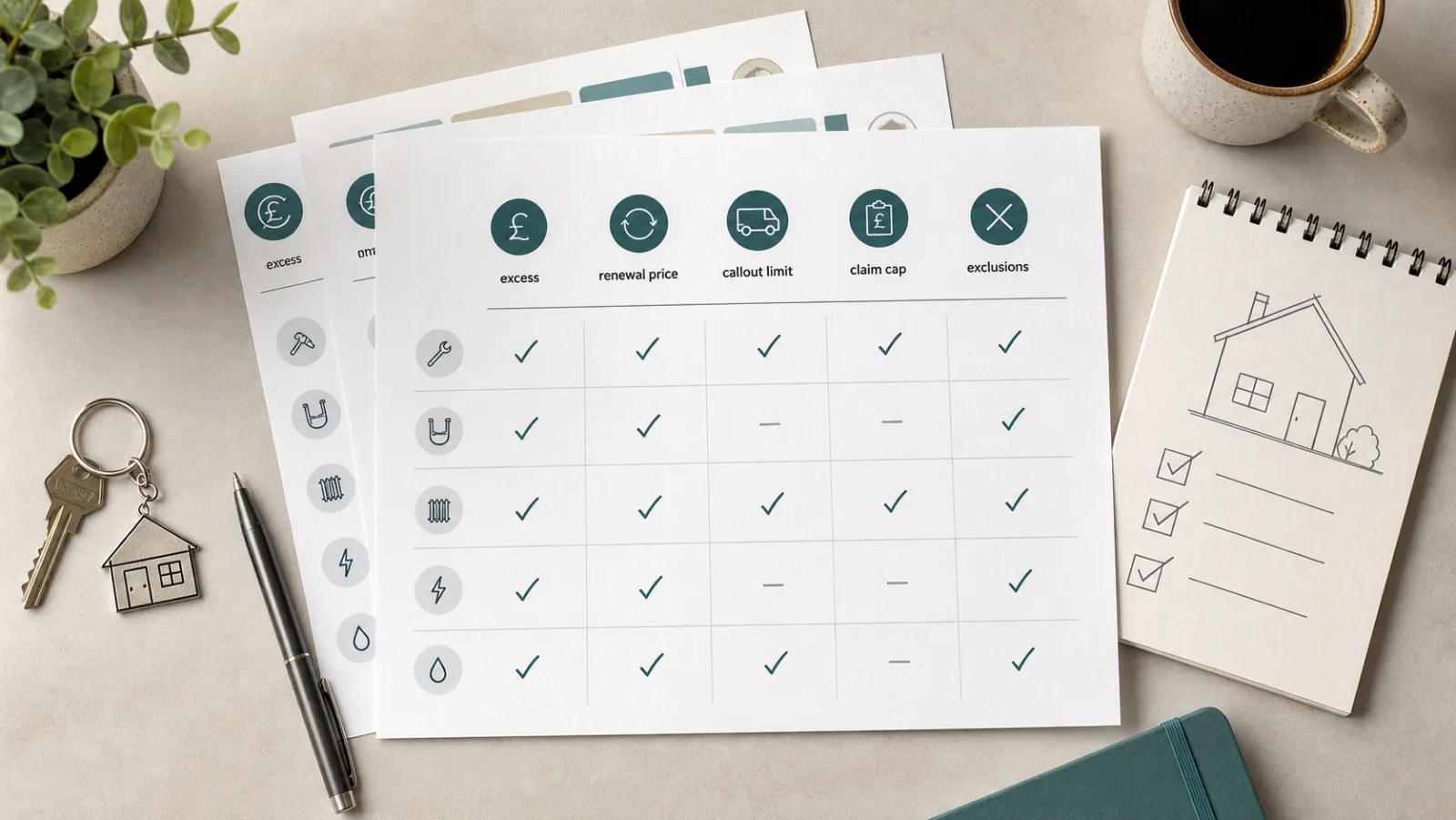
Start by separating four figures: the promotional price, the standard price, the excess per claim, and the maximum claim value. A low monthly payment can be offset by an excess that makes smaller faults uneconomic. A generous-looking callout promise can be weakened by a claim cap that only covers a limited amount of labour, parts, or repair value. A broad home emergency bundle can still leave you exposed if electrical faults are narrowly defined.
HomeServe presents home emergency cover as an insurance-style product category on its official page source. British Gas groups cover through its wider cover and HomeCare surface source. 247 Home Rescue also presents home emergency cover as a packaged product source. Those provider pages are useful comparison starting points, but they are not enough on their own. The real decision sits in the policy documents, exclusions, and renewal terms.
Citizens Advice also treats home emergency cover as something to check carefully rather than assume you need automatically source. That is the right posture for a savings guide: first ask whether the cover fits the household, then ask whether the discount improves the value.
The six checks before taking an electrical cover offer
Use this checklist before you click through any discounted electrical cover or broader home emergency cover offer.
| Check | Why it matters | A stronger offer looks like |
|---|---|---|
| Renewal price | Introductory pricing can hide the real annual cost | The renewal basis is visible before checkout |
| Excess | A high excess can make minor electrical faults poor value to claim | The excess is low enough for the faults you actually worry about |
| Claim cap | Some plans limit the value of labour, parts, or repair | The cap is clear and high enough for a realistic emergency repair |
| Callout limits | Unlimited wording and restricted wording can mean very different things | The number of callouts, repeat-visit rules, and emergency response terms are easy to understand |
| Exclusions | Pre-existing faults, poor maintenance, old wiring, and non-emergencies can be excluded | The plan clearly explains what is not covered |
| Inspection-first cases | Known defects are a repair issue, not a discount-shopping issue | The provider wording does not encourage you to ignore a fault that needs an electrician |
The best offers are boringly clear. They tell you what counts as an electrical emergency, whether internal wiring is included, what happens if parts are needed, how quickly the provider aims to respond, and whether the plan covers making safe or completing a repair. If you cannot tell whether the policy would help with a tripping circuit, loss of lighting, unsafe socket, or failed electrical accessory, the discount is not yet actionable.
London homes add another layer. A flat in a converted Victorian house, a leasehold block with communal risers, or a rental property with landlord obligations may not fit the simple owner-occupier assumptions behind a standard policy. If the fault could be outside your private wiring, inside a communal area, or connected to building management equipment, check responsibilities before buying.
How to read the main UK cover brands
HomeServe is one of the best-known names to compare because its home emergency cover page frames the product around emergency support. For a buyer, the important question is not whether the brand is familiar. It is whether the specific plan includes electrical emergencies, what the claim limit is, and whether pre-existing or maintenance-related problems are excluded. If the offer is cheaper than usual but the policy would not help with your likely fault, the saving is cosmetic.
British Gas HomeCare and related cover options are useful comparison points because many readers already associate British Gas with boiler, heating, plumbing, drains, electrics, and appliance-style support. The risk is assuming a large household name makes every cover tier equivalent. It does not. One package may focus on heating; another may include broader home electrics; another may have different excess choices. Compare the actual tier, not just the brand.
247 Home Rescue is often encountered by readers comparing lower-cost or bundled home emergency cover. The same discipline applies: check what the electrical section includes, how emergencies are defined, whether there are annual claim limits, and what happens after the introductory price. A cheap offer is useful only if the provider process, documents, and exclusions are clear enough for the risk you want covered.
YourRepair belongs in the same comparison set even when you are not starting from a single provider page. Readers commonly see YourRepair alongside HomeServe, British Gas, and 247 Home Rescue when comparing boiler, home emergency, plumbing, and electrical cover options. Treat it as another policy to decode. Look at the plan level, excess, waiting period, cancellation terms, and whether electrical cover is a core feature or an add-on.
When an offer is genuinely worth checking
A discounted electrical cover offer is worth checking when it passes three tests.
First, you would still consider the plan without the discount. That does not mean you would definitely buy it at full price. It means the cover category fits your home. If you want a single number to call for sudden electrical faults, and your wiring is generally serviceable, cover can be a reasonable convenience purchase.
Second, the policy limits match your realistic problems. In a modern flat with a clearly labelled consumer unit, your concern may be sudden loss of lighting, a socket circuit fault, or a failed accessory. In an older terrace, your concern may be recurring tripping, mixed-age wiring, damp-related faults, or an overloaded kitchen circuit. The second group may need investigation before insurance-style cover has much value.
Third, the renewal price does not turn the offer into a trap. If the first-year saving is meaningful and cancellation is straightforward, a one-year discount can be worthwhile. If renewal is vague, cancellation is awkward, or the provider relies on inertia, the apparent saving deserves less weight.
For homes where the wiring itself may be the issue, compare the offer against the cost of inspection and remedial work. Our guide to consumer unit upgrades explains why modern protection, labelling, spare capacity, and installer paperwork can matter more than a cheap emergency policy.
When to wait, inspect, or skip
Wait if the plan hides the standard price. You cannot evaluate a discount without knowing the normal price. The same applies if the offer emphasises monthly cost but buries the excess, claim cap, or policy start restrictions.
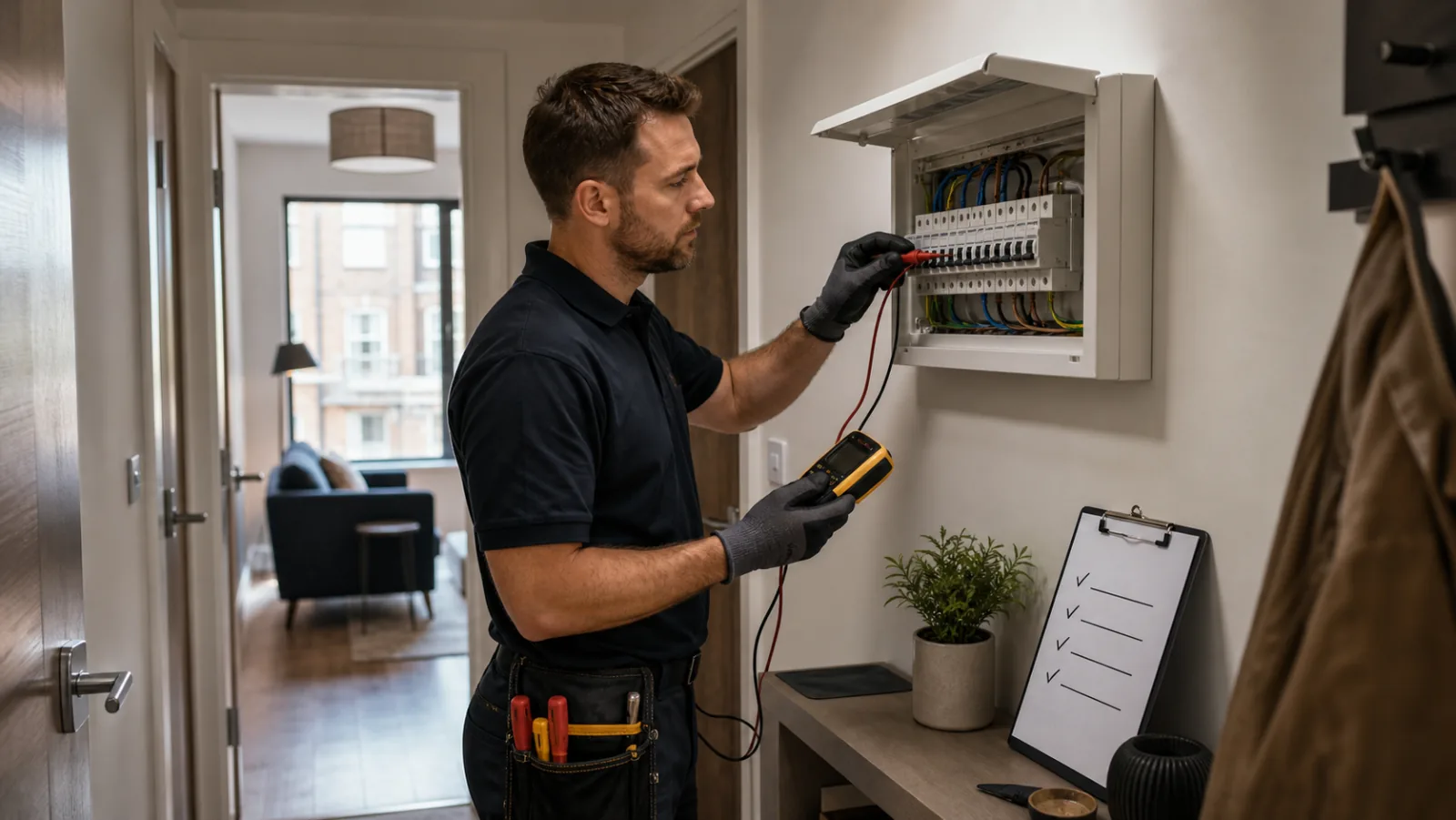
Inspect first if you have warning signs. Warm sockets, burning smells, lights that flicker regularly, circuits that trip repeatedly, old rubber wiring, visible DIY joins, damaged accessories, or a consumer unit that looks poorly labelled are not deal-shopping signals. They are diagnosis signals. An emergency policy may exclude pre-existing issues, and even where a callout is accepted, the engineer may only make the installation safe rather than solve the underlying problem.
Skip if the policy is mainly solving anxiety rather than a defined risk. Some households are better served by setting aside a repair fund and keeping a trusted local electrician's number. That is especially true if you are comfortable arranging trades, your home is electrically straightforward, and the offer would mostly duplicate cover already included through home insurance, a landlord arrangement, or a wider maintenance contract.
DIY risk is also separate from cover value. If you are drilling, mounting storage, or fitting shelves in a London flat, a home emergency policy is not a safety plan. Read our guide to wire detectors for DIY drilling in London flats and our guide to RCD plug adaptors for DIY tools before relying on after-the-event cover.
London-specific examples
A leaseholder in a purpose-built block should be cautious. If the problem is inside the flat, cover might help. If the fault is in communal wiring, intake equipment, hallway lighting, or building infrastructure, the managing agent or freeholder may be involved. Buying a domestic plan before checking that boundary can lead to frustration.
A landlord should treat cover as support, not compliance. Emergency cover may help arrange an urgent callout, but it does not replace electrical safety responsibilities, inspection reports, repair duties, or proper records. If a tenant reports repeated electrical faults, the right answer is not simply to buy the cheapest cover offer.
An owner-occupier in a relatively modern flat may be a better fit. If the consumer unit is modern, circuits are labelled, there are no known defects, and the reader mainly wants a predictable route for sudden disruption, an introductory offer can be sensible. In that case, compare the excess and claim cap against what an emergency electrician callout might cost in practice.
A homeowner with smart heating controls should also check what the policy counts as electrical versus heating or controls. If your concern is a failed thermostat, receiver, or smart control setup, read our Hive heating controls review alongside the cover terms. Some faults sit awkwardly between electrical, heating, appliance, and smart-home support.
A practical buying workflow
Use this order before buying.
Confirm you actually need cover. Check whether home insurance, landlord arrangements, leasehold management, or an existing boiler/home care plan already includes emergency support.
List the faults you are trying to protect against. Examples might include loss of lighting, socket circuit failure, unsafe accessories, or sudden internal wiring faults. Do not compare abstract cover. Compare against real risks.
Read the exclusions before the price. Look for pre-existing faults, gradual deterioration, poor maintenance, old wiring, pest damage, external supply issues, communal areas, and non-emergency repairs.
Compare total first-year cost. Include monthly price, annual price, excess, setup fees, and any waiting period before claims can be made.
Check the renewal and cancellation terms. If renewal pricing is unclear, make a note to review before the end of the offer period.
Decide whether inspection beats cover. If the home has known electrical symptoms, pay for diagnosis before buying a policy that may not respond.
Frequently Asked Questions
Are electrical cover offers worth it?
They can be worth it when the discounted plan still has clear exclusions, sensible claim limits, manageable excess, and a renewal price you would accept without the offer.
What should I check before buying home emergency cover?
Check what counts as an emergency, whether electrical faults are included, the excess, callout limits, claim caps, renewal price, cancellation terms, and pre-existing fault exclusions.
Is electrical cover a substitute for an inspection?
No. If you already have tripping circuits, warm sockets, old wiring, burning smells, or known defects, arrange inspection and repair before relying on cover.
Which brands should I compare?
HomeServe, British Gas HomeCare, 247 Home Rescue, YourRepair, and broader UK home emergency cover offers are useful comparison points, but the policy terms matter more than the brand name.
Should leaseholders buy electrical cover?
Leaseholders should first check what wiring is private, communal, or managed by the freeholder because a domestic policy may not cover building-wide electrical infrastructure.
Bottom line
Electrical cover offers are worth checking, not chasing. A discount is helpful when it lowers the price of a policy that already fits your home, your wiring condition, your responsibilities, and your tolerance for emergency callout hassle. It is weak when it distracts from unclear exclusions, a high excess, low claim cap, vague renewal price, or an electrical installation that needs inspection first.
For most London readers, the best move is to treat the offer as the final step, not the starting point. Decide whether emergency cover fits the property, check the policy limits, compare renewal cost, and only then ask whether the discount is good enough to act on.